

By Elliott Brack
Editor and publisher, GwinnettForum
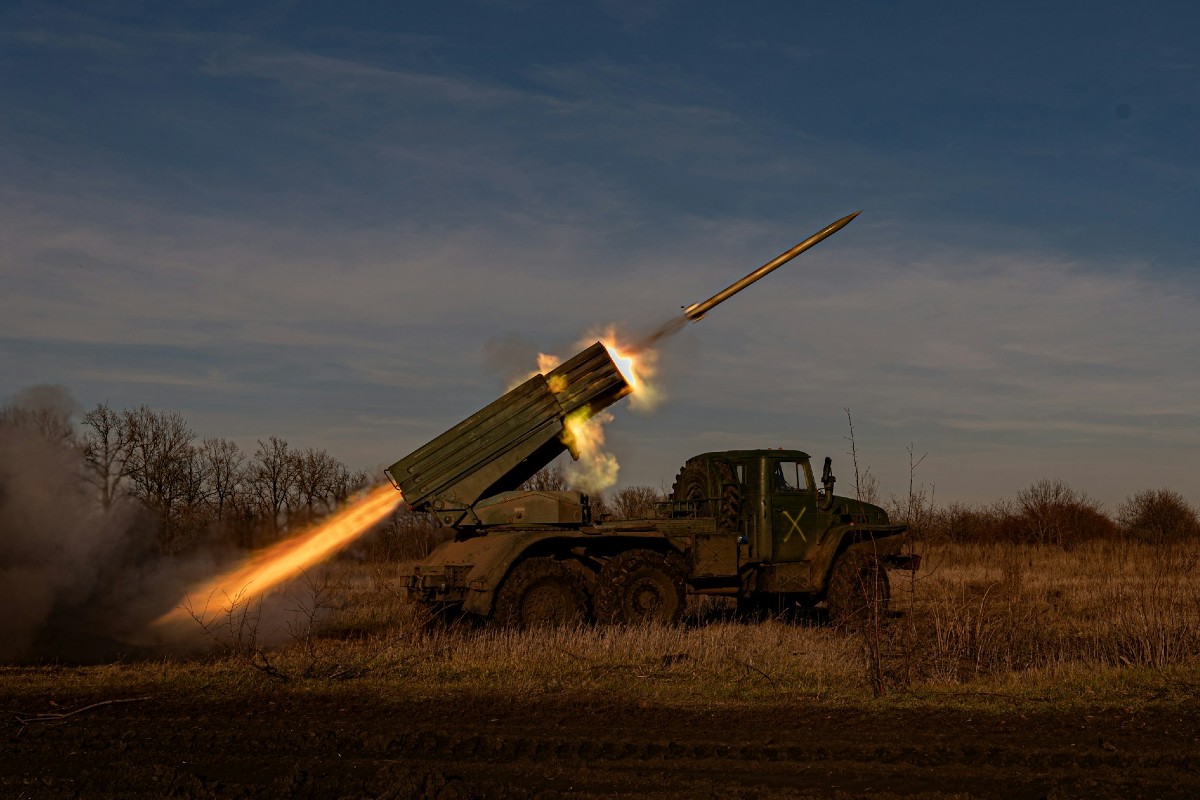
AUG. 19, 2025 | The major outcome of Russia’s invasion of Ukraine is how it has changed the way wars are now fought. That’s the conclusion of Emory Morsberger of Lilburn, who has made three journeys to Ukraine since hostilities began.
 “This war has turned the military structure throughout the world upside down,” Morsberger maintains. It’s happened in the last two years.
“Today 80 percent of the military structure is obsolete—worldwide. No longer do you have recognized front lines. Now you can be attacked, by drones, from great distances away.
“No longer are tanks and artillery the key weapons. Battle lines do not routinely face one another. Drones, on both sides, can rain down on you no matter where you are. And the drones do not have to be guided by a soldier sitting at a desk. Drones are smart now, and can find their own targets. It is the future of war.”
“More and more of the destruction of war is attack by drones, and at the same time, both sides are constantly trying to prevent drones hitting targets, what they call drone protection. The result is that both sides are trying to jam the airways, and trying to pick off drones as they zoom in on a target. It is the future of war.”
Morsberger also recognizes that drones do not necessarily look like aerial warheads. “Today there are water drones, and land drones which can carry weapons with them. The land drone looks much like a dog, and can run like a dog. These land drones can get in the ditch where there are enemy troops, and cause havoc there. With these modern weapons, the vulnerability of both sides is increased.”
Morsberger says that “Russia gets drones from China. But even most of ours are made in China, and China is passing us. We are the second or third, behind China and Ukraine, when it comes to drones.”
Morsberger has so far raised $5 million of medical equipment, generators, and water purification equipment and other material to the fighting Ukrainians.
He is also in contact with Ukrainian businessmen who want to set up manufacturing of various products for the United States markets, to avoid tariffs, since the output would be made in America. “The Ukrainians have money to invest here. They are not looking for financing.”
During a recent visit to Ukraine, Morsberger came under heavy bombardment while in Odessa and to a limited degree in Kiev. “There were air raids nightly. I spent time in a hotel in Kiev in a basement. I had a room on the first floor, and when the bombardment began, you could look out the window and see the light when a drone exploded. There was smoke throughout the city.
“We were told to stay away from windows, at least to go to the hallway where you would have walls around you.
“A couple of nights when the missiles got close, we went to the basement. There were about 20 mattresses on the floor. You just stayed there and tried to sleep until the alarms gave the all clear. Then you got up the next morning, took a shower, and began meeting with people from the Embassy again. Some people arrived late, since it had been a long night. Being under bombardment is a strange sensation, and it gives you something of a feeling of what the British went through during London’s attacks by the German missiles.
“Yet I felt I should be there in Ukraine, and wasn’t scared. I plan to go back this fall.”
- Have a comment? Click here to send an email.
