

(Editor’s note: Former Georgia Gwinnett history professor continues to do research on early history, as this contribution shows.—eeb).
By Michael Gagnon
Professor emeritus of history, Georgia Gwinnett College
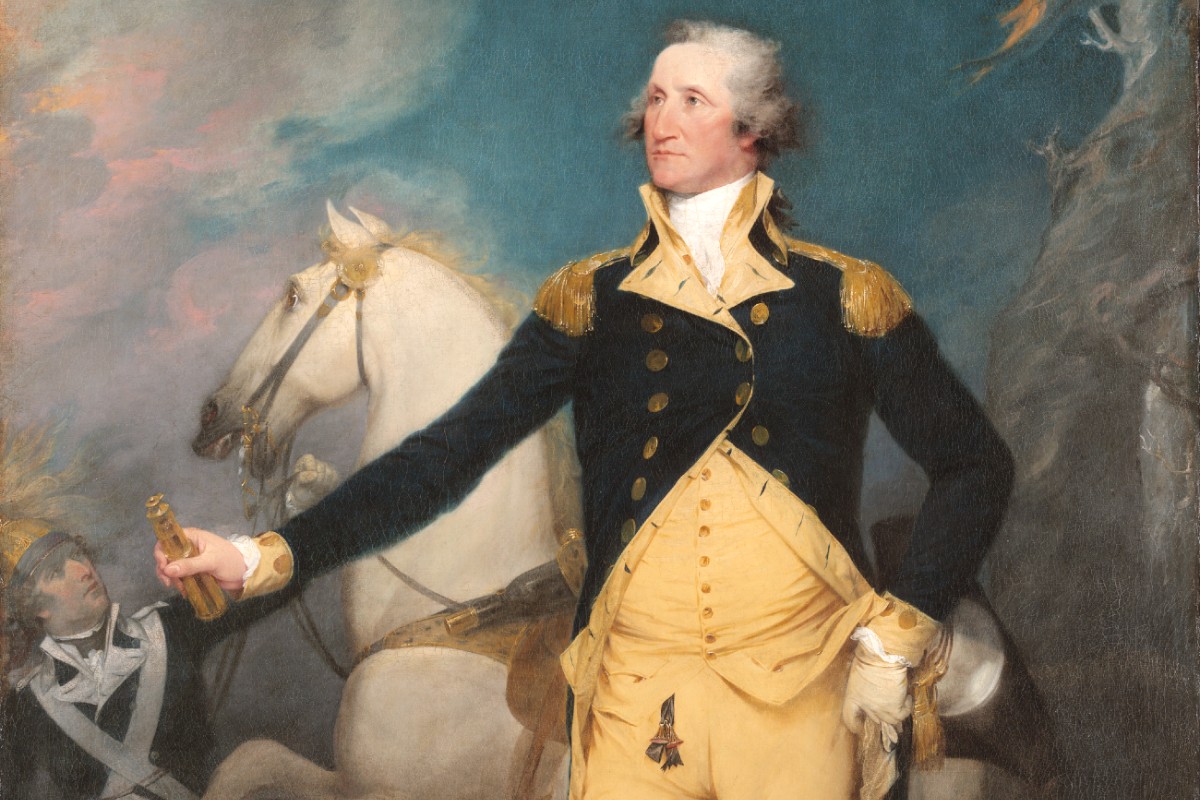
PORT ANGELES, Wash. | On May 18, 1791, George Washington began his three-day visit to Augusta, Ga., while on his presidential tour of the southern states. He previously toured the middle states and New England.

Like a royal procession, he intended his Presidential tours to introduce himself to local elites to gain their fealty to their new federal government. Since Augusta served as Georgia’s capital, the state militia and all the state’s constitutional officers escorted the President into town as he approached from Savannah.
The next morning Governor George Walton, the Richmond County’s sheriff, Augusta’s mayor and two members of the town’s elite formally offered their welcome. Among the town’s elite who signed the written welcome was Peter Carnes, an aviation pioneer who was possibly the second most famous man in America at the time. Thus, Carnes’ name added prestige to Georgia’s official welcome.
Here’s what we know of Carnes. In 1784, he built the first manned flying machine in America, a hot air balloon. A carpenter, inn-keeper and self-taught lawyer in Bladensburg, Md., Carnes likely based his plan on detailed instructions in the news accounts about French hot air balloon experiments, published only three months earlier. Carnes built a silk balloon, 35 feet in diameter by 30 feet tall, constrained by hoops, with an iron wood burning stove stoked by the passenger.
Carnes first tested this balloon near his inn and then displayed it in Bladensburg. To gain publicity for a demonstration, he advertised in Baltimore at $2 per ticket. While he may have ridden the balloon in private, he did not ascend it at Bladensburg, nor in his Baltimore demonstration on June 24, 1784, because the balloon would not lift his weight.
On his last Baltimore flight, a 13-year-old boy named Edward Warren volunteered to become America’s first aeronaut and safely made a flight for the large crowd which rewarded him by passing the hat. Carnes next launched a larger balloon made of linen in Philadelphia, on July 19, 1784, from within the city’s new “work house” yard to shield the event from view of people who did not pay.
After riding the balloon a short distance, it crashed into a wall ejecting Carnes without injury while giving those outside the walls the idea that he had died in a fiery crash. Accounts of these events were reprinted all over the country, including in Georgia.
Carnes abandoned Maryland shortly afterwards and moved south with his family after he could not pay the back rent on the inn. First Carnes practiced law in South Carolina and then moved to Augusta by 1787. Working as a lawyer and investing in real estate, he did well financially. Peter Carnes died in 1794. His widow later married the father of A. S. Clayton, for whom Clayton Street in Lawrenceville is named.
While there is no record of Washington and Carnes either meeting or talking, they would have shared a table at the dinner held for Washington. Someone would have told Washington that he was “that” Carnes of aviation.
- Have a comment? Click here to send an email.
