

By Dr. Michael Gunther
LAWRENCEVILLE, Ga. | Before Georgia Gwinnett students headed for Thanksgiving, the History and Geography Department launched a new monthly series called “Unbuttoning the Declaration @ 250.”

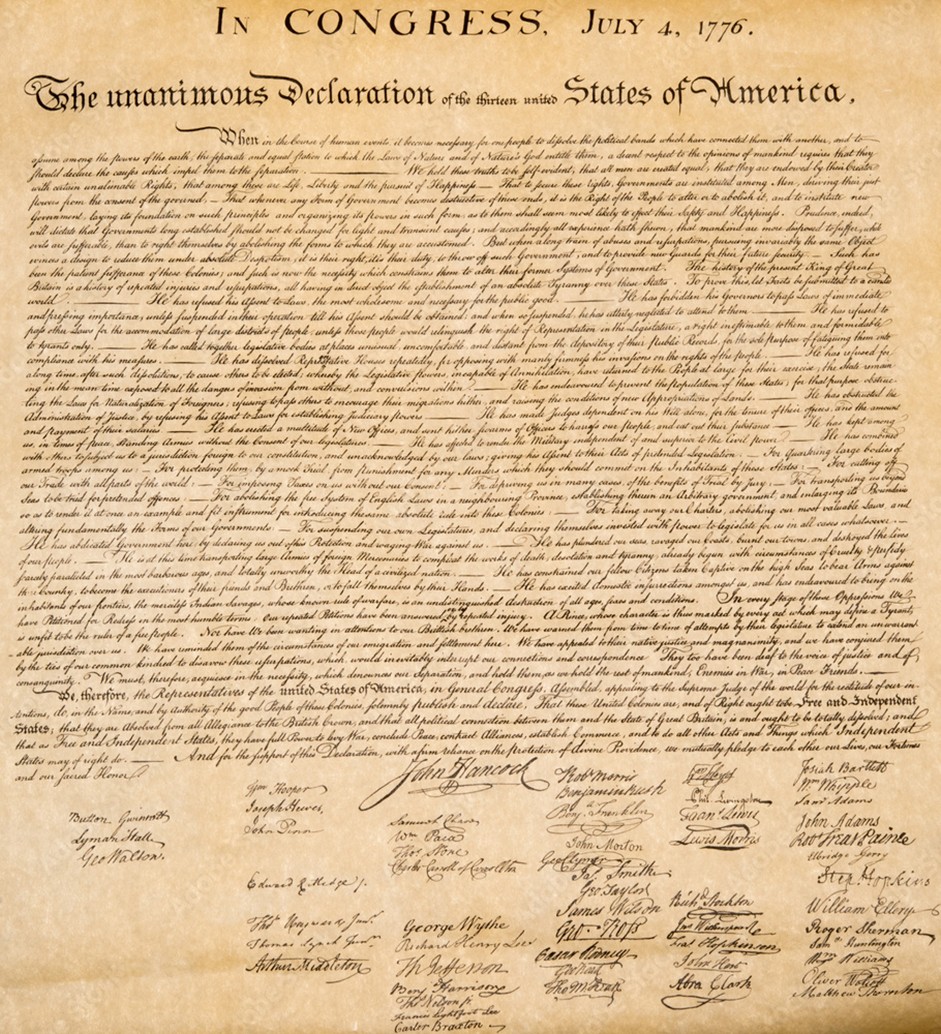
The goal of the series was to unpack (or “unbutton”) key quotes from the Declaration of Independence, both in terms of origins and legacies of ideas that were debated and communicated in 1776. The title is also meant to invoke Button Gwinnett, Declaration signer and namesake of our county and college.
Also preceding the Thanksgiving holiday, a massive new Ken Burns documentary, “The American Revolution,” aired on PBS over several nights. Before we knew it, the holiday season has come and gone. We’ll turn our calendars soon to 2026 and begin celebrating the 250th anniversary of America’s independence.
It is important that we provide opportunities for students and citizens in Gwinnett County to come together to think about what the Declaration of Independence meant in 1776, and what lessons and inspiration we can still draw from it today.
Georgia Gwinnett College held its first event in Cisco Auditorium on GGC’s campus. There, I introduced the series and spoke about the influence of English political writer and philosopher John Locke (1632-1704) on the Founding Fathers.
This talk was entitled “‘Life, Liberty…’ and John Locke.” The buried lead here is that Thomas Jefferson, the principal author of the Declaration, substituted “pursuit of happiness” for “property” in the trinity of “unalienable rights” that he and other founders learned from reading Locke. Why was that and does it matter?
My colleague, Dr. Luke Ryan, helped us mark Native American Heritage Month by discussing the evolving relationship between Native Americans and the Declaration over time. The title of his talk was “‘The merciless Indian Savages’: Native Americans and the Declaration.” Like my talk, Ryan’s drew on an actual quote from the Declaration, one that is disturbing but that also offers a perspective that should not be ignored or swept under the rug in the 250th anniversary commemorations.
Future events in this series will foreground other quotes from the Declaration, as well as the anniversary of the publication of Thomas Paine’s Common Sense in January 1776. Other types of events, including a mock reenactment signing of the Declaration by GGC students next summer, are also being planned.
The Declaration of Independence was finalized on July 4, 1776, and disseminated in printed broadsides and newspapers that summer. The actual signing began on August 2.
All evidence points to our county namesake, Button Gwinnett, signing the Declaration on August 2 and almost immediately leaving Philadelphia to head home to Georgia. A Gwinnett homecoming and community signing would be a nice way to start the spring 2026 semester at GGC!
- Have a comment? Click here to send an email.
