

GwinnettForum | Number 26.12 | Feb. 10, 2026
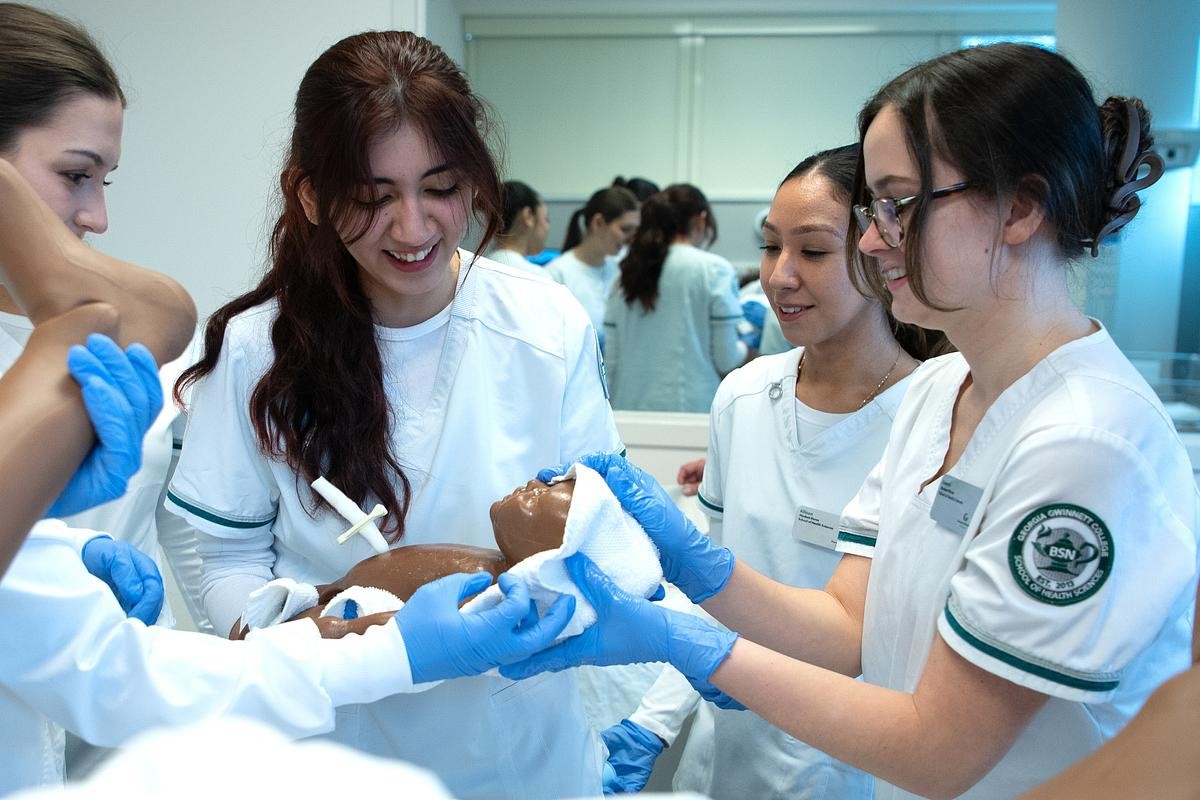
DELIVERING: Simonne Lipan, Jazlyn Sanchez, Allison Valdivia and Naomi Scumpieru Bogde work together as they learn how to clean up a newborn after delivery during the Mama Ann simulation recently in the Allied Health and Sciences building’s SIM labs at Georgia Gwinnett College. For more on this story, see Upcoming below. (Photo from Daniel Melograna/Georgia Gwinnett College.)
TODAY’S FOCUS: A summary of Norton’s Native Intelligence report
EEB PERSPECTIVE: This guy can help by sharpening your edges
SPOTLIGHT: Centurion Advisory Group
FEEDBACK: Crisis in county animal shelters is major problem
UPCOMING: Learning how to deliver is part of GGC training
NOTABLE: EMC Foundation awards $73, 444 to local charities
RECOMMENDED: The Wars of the Roses, by Dan Jones
GEORGIA TIDBIT: Chick-fil-A’s sandwich dates back to 1946
MYSTERY PHOTO: People in this town look up to this landmark
CALENDAR: Norcross offers Galentine’s Boutique Crawl on Thursday
Here’s’ Norton’s Native Intelligence report summary
(Editor’s Note: Frank K. Norton, Jr. is the Chairman and CEO of The Norton Agency in Gainesville, a multi-generational real estate, insurance, and commercial development firm founded in 1928. A leading Northeast Georgia economic forecaster, he uses “Native Intelligence™” data to guide regional business growth and is a recognized expert in commercial and residential real estate. He presented this round-up recently.–eeb).
By Frank Norton Jr.
The Norton Agency
GAINESVILLE, Ga. | For this Marketwatch, we asked ChatGPT to provide a summary of the Top Ten Trends from our Native Intelligence Forecast.
As we step into 2026, one thing is clear: North Georgia isn’t slowing down — it’s recalibrating. Our latest Native Intelligence™ Forecast highlights ten major trends shaping how we live, work, invest, and build across the region. Here’s the snapshot that matters.
- Is North Georgia “Full”? It feels crowded — but the data says otherwise. With roughly 250 people per square mile, North Georgia remains far less dense than most major metros. The real pressure points? Cars, infrastructure, and zoning — not land.
- Two Georgias, One Story: On paper, Georgia ranks middle-of-the-pack in quality-of-life metrics. In reality, it’s the #1 state to do business, a top destination for jobs, retirees, and capital. Both narratives are true — and they’re colliding here.
- The Golden Hour for Luxury Housing: The $2M–$5M market is thriving, fueled by cash buyers, lifestyle mobility, and demand for turnkey living. Luxury today isn’t about size — it’s about readiness, privacy, and experience.
- The Silent Recession: No crash. No headlines. Just pressure. Food, housing, insurance, and gas costs have risen far faster than wages. Jobs exist — buying power doesn’t. Many households are working harder just to stand still.
- Starter Homes Need a Jump Start: Homeownership starts communities. But starter homes have nearly vanished because of land costs, regulations, and density restrictions. Without new pathways, an entire generation risks renting forever.
- Data Centers Are Coming: Like it or not, data centers are now critical infrastructure. They bring massive tax revenue and power demands — forcing communities to balance economic opportunity with long-term planning.
- Absorption Is Happening — Just Slower: Industrial, multifamily, and residential projects are filling. But today’s market rewards patience, pricing discipline, and long-term strategy, not boom-era assumptions.
- Retail Has Evolved: Retail isn’t dying — it’s adapting. Drive-thrus, grocery anchors, smaller footprints, and better traffic flow now define success. Convenience is no longer a bonus; it’s the baseline.
- A Controlled Home Price Correction: From 2026–2028, expect a measured recalibration, not a collapse. Buyers want move-in ready. Sellers must price for today’s market, not yesterday’s headlines.
- Property Rights Under Pressure: Growth has sparked intense debate over land use and development. At the core is a fundamental question: who controls property — owners or the crowd?
- Have a comment? Click here to send an email.
This guy can help you by sharpening your edges

By Elliott Brack
Editor and publisher, GwinnettForum
FEB. 10, 2026 | Everyone needs them. Everyone uses them. Everyone neglects them. And all of them are dull.
 We’re not talking about old girlfriends or boyfriends. We’re talking about knives, kitchen knives in particular. Or anything that needs sharpening, from hedge trimmers, axes, shovels, reel mowers, clipper blades, scissors or pruners.
That’s where Ben Maughon of Pro Sharp in Tucker came into our life recently, sharpening our kitchen knives. He picked them up at our house Friday, worked on them, and delivered six sharp kitchen knives that afternoon. Cost $50 plus $10 delivery. Ben says we probably won’t need his services for at least another year.
How did this 25-year-old entrepreneur get into business? You might say it came about naturally. You see, his family is in the meat cutting business in Gwinnett, and Ben worked three summers with his father, Rhett Maughon, while attending Georgia College and State University in Milledgeville. (He majored in business management.) He has a grandfather, Buddy Maughon, who lives in Buford.

“As a meatcutter working with my father with knives, at the end of the day my job was to take care of the knives, to hone them razor-sharp for the next day.”
So during Covid in March of 2020, Ben started his business, thinking others needed his services. “I thought I could make some money that way.” He told neighbors, who told others, sent emails to people in his neighborhood, and he did some advertising on Google. He was still in college then, and would return to Tucker from time to time and sharpen knives. It helped him pay for college.
It was in March of 2023 when he began working full time on sharpening. “I did some cold calling, but it was just me alone working at it.” His web site maintains: “With over six years of experience, we have become the highest-rated sharpening service in Atlanta, trusted by chefs, barbers, groomers, landscapers and home cooks.”
He’ll sharpen all sorts of knives: kitchen knives, chef’s knives, Japanese knives, hunting knives. “We put a razor-sharp edge on them every time.”
Among his customers are hair stylists, barbers, pet groomers and even equestrians. “We help professionals maintain the best cutting performance.”
With all the landscapers dotting the neighborhoods in Atlanta, that’s another place he finds sharpening work. For landscapers and home gardeners, he sharpens garden tools, including lawn mower blades, hedge trimmers, axes, pruners, and reel mowers. He also sharpens industrial and specialty tools such as woodworking chisels, surgical tools, and such.
While some customers drop tools off at his office, he delivers to most of his customers the sharpened tools. He concentrates in serving northeast Atlanta. For kitchen knives, he usually spends from five to ten minutes on each knife, depending on its condition. He grinds, tones and cleans the knife for his customers. “If it’s got an edge, we can sharpen it,” he proudly says.
It’s good to see a young person find his niche and make the most of it. That’s Ben Maughon, Pro Sharp of Tucker.
Knives: everyone needs them, and Ben can keep them sharp!
- Have a comment? Click here to send an email.
Centurion Advisory Group
 The public spiritedness of our sponsors allows us to bring GwinnettForum.com to you at no cost to readers. Centurion Advisory Group serves successful individuals and businessowners who choose to live on purpose. We bring our perspective and processes to bear on strategies which help them build wealth, transfer assets and values across generations, give to causes meaningful to them and their families, reduce their tax bill, and allow them to invest in ways which align with their values.
- For more details, go to www.CenturionAG.com.
- For a list of other sponsors of this forum, click here.
Crisis in county animal shelters is major problem
Editor, the Forum:
 Every day in Gwinnett County and across Georgia, healthy dogs and cats are euthanized for one reason: shelters have run out of space. As a Georgia resident who has seen local shelter posts become increasingly urgent, it’s clear that what’s happening behind the scenes is far more serious than most people realize.
This isn’t a seasonal increase, nor is it limited to rural communities. Even shelters in large metropolitan areas—including Fulton and DeKalb counties—remain chronically overcrowded and continue to euthanize animals due to lack of space.
When the number of animals entering the shelter consistently exceeds the number leaving, euthanasia becomes a space management decision. This includes puppies, kittens, pregnant animals, and newborn litters when capacity is exceeded. These outcomes are not rare or isolated; they are routine in shelters throughout Georgia.
Adoption and rescue save lives, but they can’t solve overpopulation. Licensed rescues already remove thousands of animals, relying heavily on unpaid volunteers, foster homes, and private donations, and often cover medical care for preventable conditions.
The underlying problem is uncontrolled overpopulation: backyard breeding, so-called “accidental” litters, and insufficient access to spaying and neutering services. When more animals are born than there are available homes, shelters can’t keep up. This crisis comes at a real cost to taxpayers. Counties repeatedly pay to impound, house, feed, euthanize, and dispose of animals.
Building larger shelters only increases these costs without addressing the root cause. The public deserves to know this is happening. Georgians must be informed and demand better solutions. We cannot get out of this crisis through adoption alone. We must prioritize prevention and keep animals out of shelters in the first place.
– Mona Stephens, Dacula
Local governments spend billions each year
Editor, the Forum:
You are on point with the lack of news reporting throughout our nation. I grew up in St. Louis and we had TWO papers AND a morning and evening edition. That’s why I appreciate the Gwinnett Daily Post and the GwinnettForum.
I do want to clarify one of your sentences about the budgets of Gwinnett. Their budgets are in the BILLIONS, not millions. Hats off to the County Commission for reducing their $2.4 BILLION budget by $84 million.
More scrutiny should be placed on Gwinnett County Public Schools. Their budget has increased 42 percent in the last four years… to a WHOPPING $3.4 BILLION. And the passage of E-Splost added another $1 BILLION over the next five years. This spending is unsustainable. You and the Gwinnett Daily Post have a Herculean task of educating the population about our two large public bodies.
– Cathy Loew, Peachtree Corners
Dear Cathy: Thanks for clarification. The sentence about money read: “Gwinnett County Commission and the School Board, spend millions of dollars each year with little spotlight on them.” While they do spend millions, it all adds up to billions, as you say.-eeb
- Send us your thoughts: We encourage you to send us your letters and thoughts on issues raised in GwinnettForum. Please limit comments to 300 words, and include your hometown. The views of letters are the opinion of the contributor. We reserve the right to edit for clarity and length. Send feedback and letters to: ebrack2@gmail.com.
Learning how to deliver is part of GGC training
A baby’s first cry. A mother’s tears of joy. Those are the sounds of a magical time and a testament to the miracle of childbirth. However, not all experiences are joyful. According to the March of Dimes 2025 Report Card, the state of Georgia received a grade of F for preterm birth, infant mortality, leading causes of infant death and maternal health.
 At Georgia Gwinnett College (GGC), students in the Bachelor of Science in Nursing program are gaining critical, hands-on experience in maternal and infant care. The program now features a state-of-the-art simulation mannequin, affectionately called Mama Ann, that realistically simulates childbirth and some complications of childbirth.
Dr. Susan Dougherty, RN, DNP, assistant professor of nursing at GGC, says: “It’s important for our students to know what to look for in their pregnant patients and newborns. Lectures give students the background information and what to expect, but the childbirth simulation brings clarity to what they’ve learned.”
Mama Ann stands out for her highly lifelike capabilities, helping students feel as though they are responding to a real clinical situation. She is controlled by computer from a separate room, where faculty observe students in the simulated hospital room through a one-way mirror.
“Mama Ann’s skin is realistic, and students can feel her pulse in several places on her body just like a human,” says Thienthao Tran, simulations lab coordinator. “Students can feel the contractions and listen to the fetal heart rate. Mama Ann’s eyes blink and can dilate. Students learn to watch for symptoms that could signal complications and react to them quickly.”
In addition to routine labor and delivery scenarios, Mama Ann can simulate serious complications, including seizures, post-partum hemorrhage, eclampsia, abnormal fetal positions such as breech presentation, when the baby is positioned feet or buttocks first, and shoulder dystocia, when the baby’s shoulder becomes stuck after the head is delivered. The simulation can also include umbilical cord complications.
Research supports the effectiveness of this type of training. A January 2026 systematic review published in Cureus found that simulation-based training for nurses resulted in a significant reduction in adverse maternal and neonatal outcomes.
“By being able to recognize and react to any abnormalities the mother or infant experience before, during or after childbirth, our students will have the knowledge and hands-on skills to know what to do,” says Dougherty. “It’s important because nurses see OB clients in all parts of a hospital. They may encounter pregnant patients in the ED (emergency department) who were brought in as a result of an accident or other event, so they need to know how to handle those complications for the safety and well-being of the mother and infant.”
Doan Mallory, ’26, a Lawrenceville native, said the decision to become a nurse was inspired by her mother, a nurse, and her younger sister. “My younger sister is really allergic to nuts and has had a few near-death experiences because of it,” she says. “I want to know what to do and be that go-to person if something happens.”
Although she plans to work in critical care after graduation, the childbirth simulation has been invaluable. “It’s one thing to look at pictures and read the words, but it’s a whole other thing when it’s happening in real time,” says Mallory. “I want to get as much practice as possible so I can build my proficiency and critical thinking skills. In this situation, you’re caring for two humans, so knowing and recognizing early warning signs is important.”
EMC Foundation awards $73, 444 to local charities
The Jackson EMC Foundation board of directors awarded a total of $88,444 in grants for organizations during its recent meeting, including $73,444 to organizations serving Gwinnett County.
 $15,000 to Hope Clinic, Inc., Lawrenceville, for its Chronic Care Management Program to cover lab fees for uninsured and underinsured residents in Barrow, Gwinnett, Hall and Jackson counties.
- $10,665 to the Georgia Lions Lighthouse Foundation, Inc. for its Sight-Saving Surgery Program to provide cataract, glaucoma and retinal surgeries for uninsured residents in financial need in all counties in Jackson EMC’s service area.
- $10,000 to Giving Health, Inc., to provide on-demand telehealth services to individuals and families in need in Barrow, Clarke, Gwinnett, Jackson, Lumpkin and Madison counties.
- $7,500 to ALS United of Georgia for its Kostiuk ALS Care Grant Program to provide support for individuals with ALS with home care, medical expenses, equipment, supplies, home modifications and transportation for residents in Barrow, Clarke, Hall and Gwinnett counties.
- $7,000 to Bridging Hope, Gainesville, for its Advocacy and Trauma Recovery Program to provide trauma-informed counseling sessions for survivors of sexual violence in Banks, Gwinnett, Hall, Jackson and Lumpkin counties.
- $5,654 to Vision to Learn for its Atlanta Vision Program to provide mobile vision clinics with screenings, exams and prescription glasses for children in Gwinnett County.
- $4,000 to Project Adam Community Assistance Center, Winder, for its Community Assistance Center Program to provide food for participants in Banks, Barrow, Clarke, Gwinnett, Hall, Jackson, Madison and Oglethorpe counties.
- $3,820 to Atlanta Ronald McDonald House Charities, Inc. for its Adopt-a-Family Program to provide housing, meals and transportation for families of children receiving critical medical care in all counties in Jackson EMC’s service area.
- $3,705 to Kate’s Club, Inc. for its KC Connects School Based Grief Group Program to support school groups for grieving children and teens in Clarke, Gwinnett, Jackson and Madison counties.
- $3,600 to Baptist Mobile Health Ministry Foundation, Inc. to provide dental supplies for its dental clinics for patients in need in Gwinnett County.
- $2,500 to Mother’s Advocacy Project, Inc. Norcross, for its Trauma Assimilation and Social Stability (TASS) program to provide transportation costs to counseling sessions for participants in Gwinnett County.

The Wars of the Roses, by Dan Jones
 From Susan McBrayer, Sugar Hill: When we think of a mad king, some people think of the British king, George III. But there was a British king every bit as mad as George III who lived more than 300 years earlier. That man was Plantagenet King Henry VI, who became king as an infant and reigned for nearly 40 years. In this book, author Dan Jones goes into detail about how and why Henry’s relatives fought for 30 years to take away his crown. It also relays stories of the battles – and the families – of the two main Plantagenet branches – the descendants of John of Gaunt (the Lancasters) and the descendants of his brother, Edward Langley, (the Yorks) who fought what’s called “the cousins’ wars.” Spoiler alert – the crown ended up on the head of a Tudor! I’d say this book is for diehard fans of this time period in British history. The full title is The Wars of the Roses: The Fall of the Plantagenets and the Rise of the Tudors.
- An invitation: what books, restaurants, movies or web sites have you enjoyed recently? Send us your recent selection, along with a short paragraph (150 words) as to why you liked this, plus what you plan to visit or read next. Click here to send an email.
Chick-fil-A’s sandwich dates back to 1946
Chick-fil-A has distinguished itself in the hospitality industry with such practices as opening properties in shopping malls, sponsoring college football’s Chick-fil-A Bowl in Atlanta and the Ladies Professional Golf Association’s Chick-fil-A Charity Championship in Stockbridge, creating award-winning advertising, and remaining closed on Sundays.
 Truett Cathy opened the Dwarf Grill—which he later renamed the Dwarf House—in 1946 and developed the pressure-cooked chicken breast sandwich there. Chick-fil-A sandwiches were first sold to individual restaurants around the country while Cathy pondered expansion of his own business. When the Astrodome in Houston, Texas, opened in 1965, Chick-fil-A sandwiches were sold there, as they were in the Atlanta Stadium when it opened in 1966. The first Chick-fil-A restaurant opened in Atlanta’s Greenbriar Shopping Center in 1967.
In 1982, despite the company’s growth, its leaders faced a potential crisis. After other fast-food restaurants entered into the chicken sandwich business, Chick-fil-A sales diminished and the cost of chicken breasts increased. The company had just moved into a new $10 million Atlanta headquarters and was seeing a noticeable decline in revenues. Cathy assembled the company’s eight-person executive committee to develop what he termed “a corporate purpose:” “To glorify God by being a faithful steward of all that is entrusted to us. To have a positive influence on all who come in contact with Chick-fil-A.” That same year, the chain also added chicken nuggets to the menu.
Over its history, Chick-fil-A has branched far beyond its early in-mall days, expanding to free-standing restaurants, drive-through-only operations, full-service Chick-fil-A Dwarf Houses, Truett’s Grill outlets, Truett’s, and restaurants in such nontraditional locales as college campuses, hospitals, and airports. Recognizing early in the 21st century that fast-food patrons want a variety of nutritional choices, Chick-fil-A began offering such menu items as grilled chicken sandwiches, chicken strips, chicken wraps, and fruit cups. Throughout the 2010s, Chick-fil-A expanded rapidly, opening locations in states far from the Southeast. At the height of this push, Chick-fil-A became a subject of criticism.
Chick-fil-A continued opening new locations nationally, and as of 2025, the only states that did not have a Chick-fil-A restaurant were Alaska and Vermont. In the early 2020s, Chick-fil-A began entering global markets, opening restaurants in Canada and the United Kingdom.
Chick-fil-A has made its mark in the advertising world with its “Eat Mor Chikin” campaign, the most successful marketing effort in the company’s history. The campaign, which features cows, made its debut on Atlanta billboards in 1995.
Chick-fil-A is known for its inventive employment practices, providing franchise opportunities to potential operators for lower initial fees and investments than their competitors, with Chick-fil-A covering most start-up costs. In exchange, Chick-fil-A takes a higher percentage of profits and continues to own the real estate as an investment. The application process for potential franchisees is rigorous, with fewer than one percent of applicants being approved. The company has also established a program through which scholarships are available to any employee for the college or university of his or her choice; more than $191 million had been awarded to Chick-fil-A employees by 2024.
- To view the Georgia Encyclopedia article online, go to https://www.georgiaencyclopedia.org
People in this town look up to this landmark
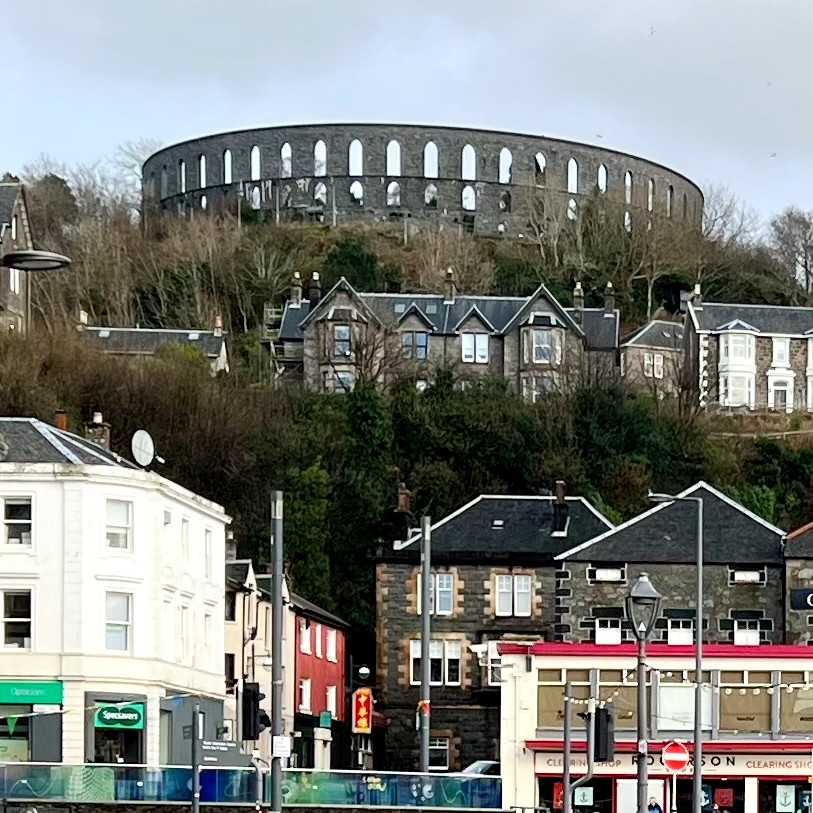
When you are in this area, you often look up to check out this landmark. See if you can determine where this photograph was taken. Send your idea to ebrack2@gmail.com and tell us your hometown.
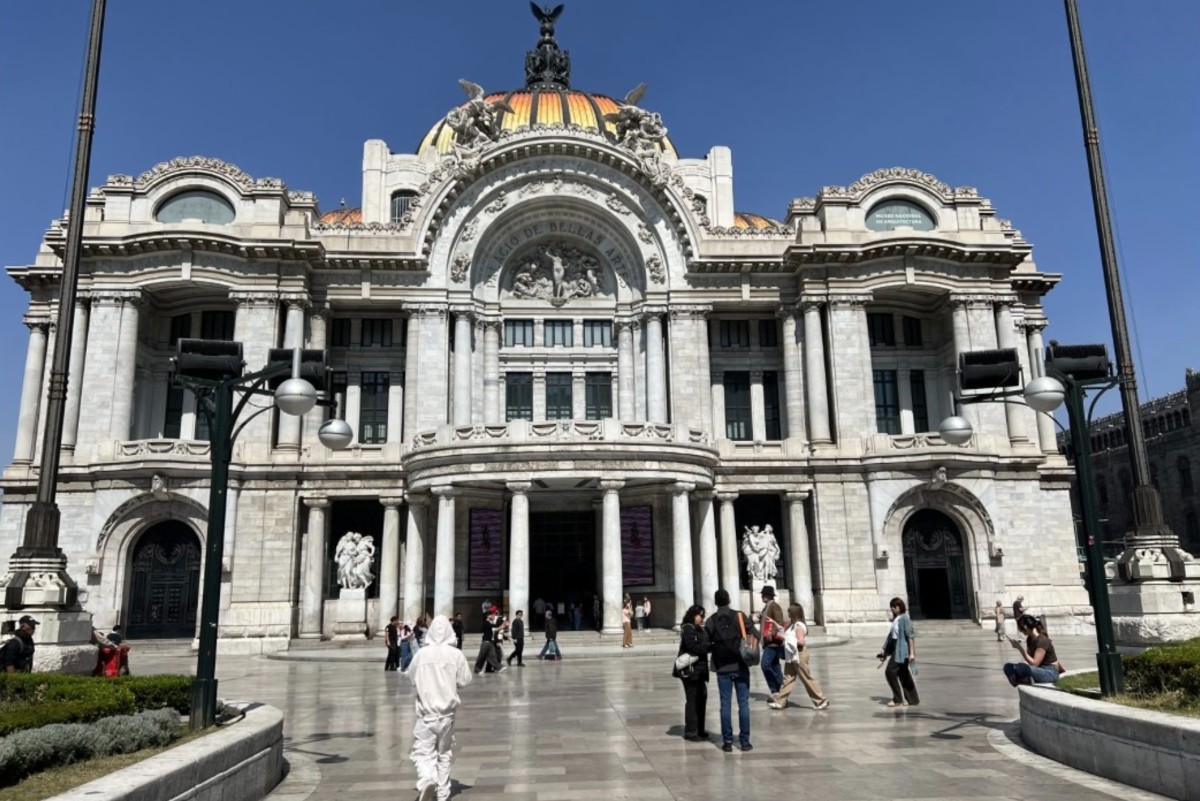 Jay Altman of Columbia, S.C. recognized the last mystery. “The Palacio de Bellas Artes (Palace of Fine Arts) is a prominent cultural center in Mexico City. It hosts performing arts events, literature events and plastic arts galleries and exhibitions (including important permanent Mexican murals). “Bellas Artes” for short, has been called the “art cathedral of Mexico”, and is located on the western side of the historic center of Mexico City which is close to the Alameda Central park.” The photo came from Sharon LeMaser of Decatur, via Susan McBrayer of Sugar Hill.
Also recognizing this mystery were George Graf of Palmyra, Va.; Stewart Ogilvie, Reheboth, Ala.; and Allan Peel of San Antonio, Texas, who told us:
“The Palacio de Bellas Artes, is clearly marked and legible on the main arch under the dome, and above the central statue of Apollo, the Greek god of music and arts. Located in the historic center of Mexico City, it is often called the ‘Art Cathedral of Mexico,’ and is one of the most prominent cultural centers in the country.
“The Palacio serves as a multi-use cultural venue that houses the National Theater, the National Museum of Architecture, and the Museum of the Palace of Fine Arts. It is most famous for its permanent collection of massive murals by legendary artists like Diego Rivera (1886–1957), David Alfaro Siqueiros (1896–1974), and José Clemente Orozco (1883–1949). It also regularly hosts the Ballet Folklórico de México and the National Symphonic Orchestra.
“Originally intended to replace the demolished National Theater in time for the 1910 centennial of Mexican Independence, construction began on October 1, 1904. However, construction was halted in 1913 due to the outbreak of the Mexican Revolution and technical difficulties caused by the building sinking into the city’s soft subsoil. In an attempt to slow the rate of descent, four heavy Pegasus statues that were originally installed on the palace’s roof were moved to the surrounding plaza. After relocating the final statue, construction began again in 1932 and the palace was inaugurated on November 29, 1934.”
- Share a Mystery Photo: If you have a photo that you believe will stump readers, send it along (but make sure to tell us what it is because it may stump us too!) Click here to send an email and please mark it as a photo submission. Thanks.
Norcross offers Galentine’s Boutique Crawl on Thursday
 Learn more about authentic representation and preservation of Black Americana decorative arts and explore the inspiration behind Precious Black Jewels by Tanzy Ward. This event will be held on February 11 at 11 a.m. at the Hooper-Renwick branch of Gwinnett Public Library in Lawrenceville.
The Norcross PDC (people drinking coffee) meets each Wednesday at 8:15 a.m. at the 45 South Café in downtown Norcross. The February 11 meeting will have Steve Edwards of Waste Management, who will discuss recycling in Norcross. The event is free and visitors are welcomed.
Enjoy Galentine’s Boutique Crawl in Norcross on Thursday, February 12 from 5 to 8 p.m. Stop by participating downtown shops, collect stamps on your Galentine’s Passport, and enjoy exclusive in-store specials along the way. Turn in your completed passport to be entered to win a grand prize featuring goodies from your favorite local shops and businesses!
The Southwest Gwinnett Chamber will host a Thursday Thought Leaders Luncheon on February 12 at 11:30 a.m. at Hilton Atlanta Northeast. The guest speaker will be Roger C. Tutterow, Ph.D., professor at Kennesaw State University. The topic is “The Economic, Political and Business Climate.” Registration is required and closes February 10.
Bestselling author Lynn Cullen discusses her newest historical fiction novel, When We Were Brilliant, on February 12 at 6:30 p.m. at the Duluth Branch of Gwinnett County Public Library. The book is about the determination and friendship of Marilyn Monroe and Eve Arnold.
Hydroponic gardening is the topic of the next meeting of the Gwinnett Master Gardeners. The meeting will be at 12:30 p. m. on February 16 at the Bethesda Senior Center, 225 Bethesda Church Road. The speaker will be Christine Todd, who will share how to grow a wide variety of plants hydroponically, including pineapples, tomatoes, peppers, wildflowers, strawberries and herbs. The Gwinnett Master Gardeners meetings are free. Join the group for lunch and bring a dish to share.
Novelist talk: Radha Lin Chaddah discusses her novel, And the Ancestors Sing, a multigenerational story of sacrifice, survival, and the unbreakable pull of home, set against the rapidly changing backdrop of post-Cultural Revolution China. This will take place on February 17 at 12:30 p.m. at the Duluth Branch of Gwinnett County Public Library.
The Peachtree Corners Garden Club will hold a seed swap on February 19 from 6:30 p.m. to 8 p.m. at the City Hall Community Chest Room. Lynda Pollock will speak about seed starting, including vegetables and native plants.
Acclaimed author Terah Shelton Harris discusses her newest novel, Where the Wildflowers Grow, a poignant story of survival and redemption that questions what it means to stop existing and start living. This will take place on February 20 at 6:30 p.m. at the Duluth Branch of Gwinnett County Public Library.
Gwinnett Symphony Orchestra will present a concert on Sunday, February 22 at 5 p.m. at the First Christian Church of Atlanta, 4532 LaVista Road in Tucker. This concert features O Magnum Mysterium by Morten Lauridsen performed for brass choir, and Te Deum by Arvo Pärt performed by Gwinnett Symphony Chamber Singers and Chamber Orchestra with Conductors Rick Smith and Robert Trocina shaping an evening of reverence and inner light.
Award-winning author Denny S. Bryce will discuss her newest historical fiction novel, Where the False Gods Dwell, inspired by choreographer Katherine Dunham’s dance expedition, and the search for destiny that turns into a struggle for survival. This will be at the Duluth Branch of Gwinnett County Public Library on February 25 at 6:30 p.m.
GwinnettForum, which has been published online since 2001, is provided to you at no charge every Tuesday and Friday. The publication offers an online community commentary for exploring pragmatic and sensible social, political and economic approaches to improve life in Gwinnett County, Ga. USA. Learn more:
- Editor and publisher: Elliott Brack, 770-840-1003
- Mailing address: P.O. Box 1365, Norcross, Ga. 30091
- Work with us: If you would like to learn about how to be an underwriter to support the publication of GwinnettForum as a community resource for news and commentary, please contact us today.
Subscriptions to GwinnettForum are free.
- Click to subscribe.
- Unsubscribe. We hope you’ll keep receiving our great news and information from GwinnettForum, but if you need to unsubscribe, go to this page and unsubscribe in the appropriate box.
- © 2026, Gwinnett Forum.com.
