

GwinnettForum | Number 26.14 | Feb. 17, 2026
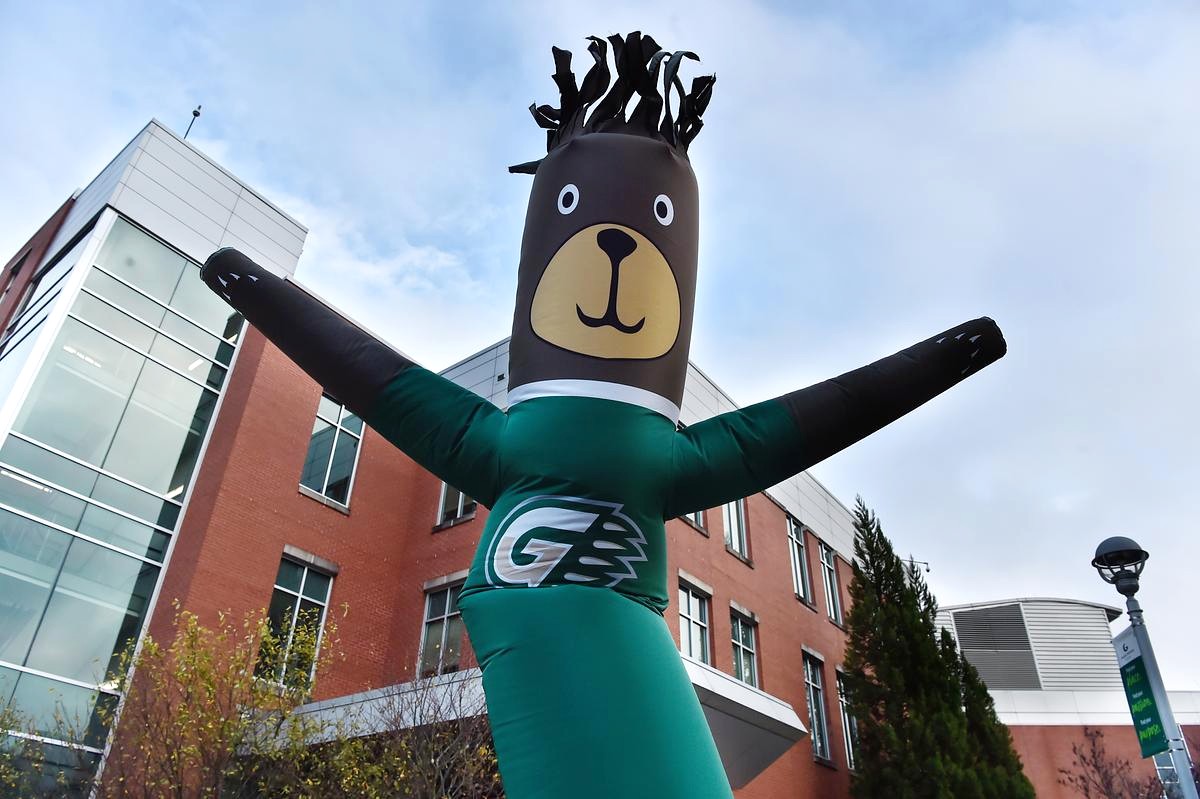
LEARN MORE about what college life consists of at Georgia Gwinnett College. Its doors for Preview Day will be open on Feb. 21 from 8:30 a.m. to 1 p.m. Future students and their families are invited to explore campus, meet faculty and students, and see firsthand what makes GGC special. Details at Upcoming below.
TODAY’S FOCUS: Remembering fondly what happened to his Porsche
EEB PERSPECTIVE: Of consideration: bucket lists and panic buttons
SPOTLIGHT: Howard Brothers Outdoor Power Equipment and Hardware
ANOTHER VIEW: Why you should care about the Federal Reserve System
FEEDBACK: We have zero tolerance for inflammatory comments
UPCOMING: GGC planning Preview Days on Saturday
RECOMMENDED: The Invention of Wings, by Sue Monk Kidd
GEORGIA TIDBIT: Fernbank Science Center consists of 65 acres
MYSTERY PHOTO: Clues pop out to greet you in today’s mystery photo
CALENDAR: Congressman Buddy Carter speaks Wednesday at PDC
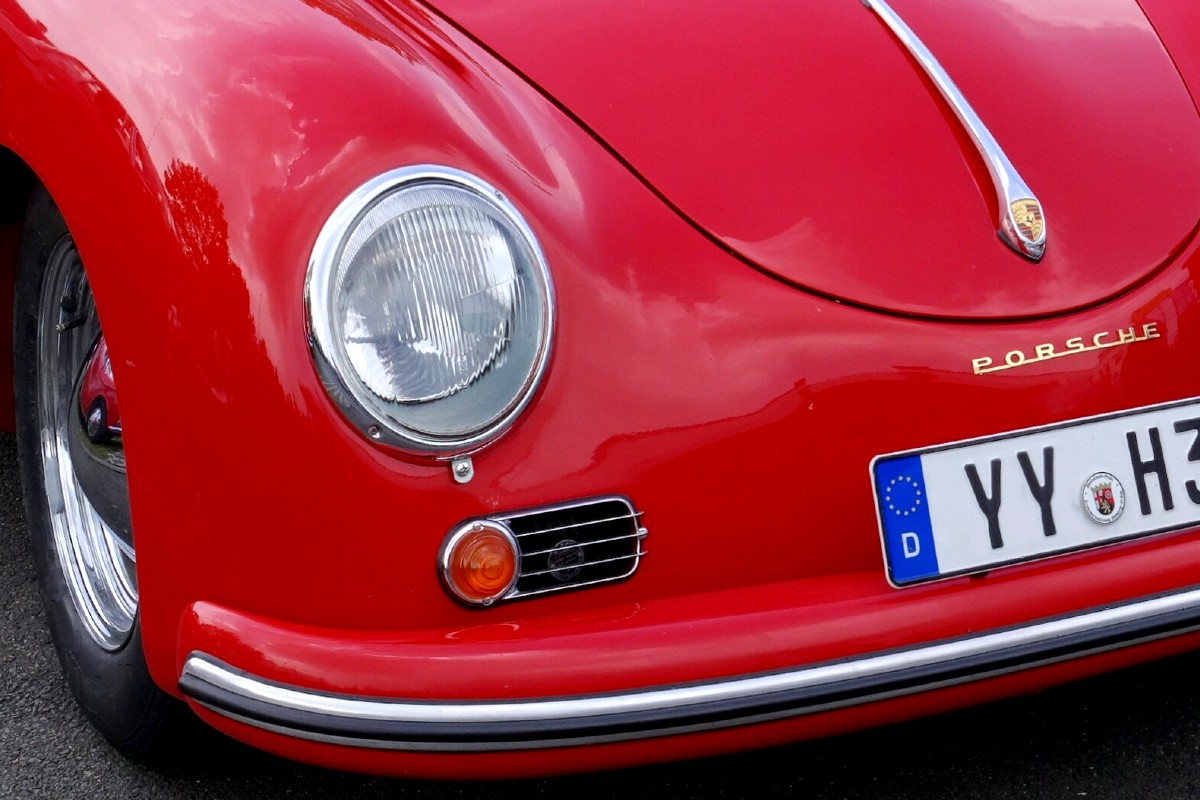
Remembering fondly what happened to his Porsche
By Mike Eberlein
PEACHTREE CORNERS, Ga. | The first Volkswagen Beetle I saw was in Los Angeles at Leon’s Shell gas station. I was 15 years old and helped out around the station as a $2 an hour pump jockey.

It was a shock when I opened the front hood of the VW to check the oil: “Hey! Where’s the engine?” Of course, the car owner, an Army retiree who had served in Germany, laughed at my dismay.
I was intrigued. Why was almost every American car front engined? As an avid reader of car magazines, I soon learned that Dr. Ferdinand Porsche had designed the first Volkswagen, or people’s car, in the 1930s. It had taken many years for the first VWs to appear in the USA, probably because of hatred and anything to do with Nazis and Germany after World War II.
The good doctor also conceived of the idea of a mid-engined car, the first to bear the Porsche name, which was developed by his son and appeared in 1948. By the mid 1950s, Porsche race cars, then rear engined, had found success in the PanAmerican Carrera road race and the Targa Florio, and were beginning to enjoy success among U.S. sports car fans in amateur racing events.
I bought my first Porsche, a red 1964 Speedster S, a small convertible with a 1600 cc engine and a four-speed transmission, for the sum of $1,156. I had been married only a few months and without my wife’s permission, used her checking account to buy the car. (To say that she was angry would be an understatement.)
But, with time, fun and the convenience a car afforded, the Porsche grew on her too. We drove the little Speedster on our honeymoon to visit first, Fish Lake and then Salt Lake City, Utah. The bright red car awed her family and elevated my standing, which as a non-Mormon had not been very high. It also helped that we lived in Hollywood.
Sadly, months later, I sold the Porsche to a young woman, who failed to heed my warnings about the engine RPMs. I tried to hammer home the warning that she had to maintain 2000 Revs per minute—ALL THE TIME when driving the car.
She didn’t. It blew and she wanted her money back. Her purchase money had been spent and the wife and I, students then, had no way of refunding it.
Meanwhile, I started autocrossing the Porsche—that is racing against the clock on courses set up in a large parking lot, etc. Most courses featured many tight turns. In order to be competitive, I purchased four USED, BlueStreak tires—taken off a race car. I installed them, without the wife’s knowledge or appreciation.
She was employed part time, after school, in an office building on Wilshire Boulevard, one of LA’s busiest streets. Running a little late to work after school, in a light rain, my wife approached the intersection of Vermont and Wilshire, turned the corner and the car spun wildly out of control– at least twice, in the busy traffic. I’m sure you have heard of the woman scorned…this was the woman scared—worse. Goodbye Porsche. I didn’t buy another for two years.
I sadly tell the story about cars which I have owned and sold— cars which are now considered classics and are worth many more dollars than when I owned them. In this case, you might buy a Guards Red, 356 style, Porsche Speedster S today for $250,000.
I only have two of the German hot rods now. More on them and other Porsches, a Cobra, a Corvette and Vintage race cars in future episodes.
- Have a comment? Click here to send an email.
Of consideration: bucket lists and panic buttons

By Elliott Brack
Editor and publisher, GwinnettForum
FEB. 17, 2026 | You’ve heard of “bucket lists,” a list of goals, dreams, and experiences a person hopes to achieve in their lifetime, specifically before they die or “kick the bucket.”
 Where does the term come from? It’s believed to stem from old, dark, or obscure settings, potentially related to slaughtering animals or suicide methods where a bucket was kicked away. One of the first public use was, we learn from the Internet, by screenwriter Justin Zackham in 1999. It was widely popularized by the 2007 movie The Bucket List, starring Jack Nicholson and Morgan Freeman, which follows two terminally ill men completing their wish lists.
The term became widely used in the early 21st century and was added to the Oxford English Dictionary in 2013.
We ran across a local fellow the other day, who recently put together his own bucket list he hopes to accomplish, by visiting the local area. While most of us haven’t produced our own bucket lists so far, let’s take a cursory view of his, which may give some of us ideas.
Here with comment, is his Bucket List:
- Go to Red’s Corner in Tucker to browse for books in Tucker, Ga.
- Go to Northside Atlanta Benevolent Association on Saturday morning for breakfast and fellowship.
- Go to Stone Mountain for Georgia Native Plant Society GNPS volunteer work.
- Go and visit the Beltline in downtown Atlanta.
- Go to the Computer Museum in Roswell.
- Meet up with a (named) friend for coffee.
- Walk into Stone Mountain Park. (This might be best said to “visit Stone Mountain park and take a stroll.)
- Go to Greenville, South Carolina for a couple days.
- Norcross is planning an arboretum, a botanical garden at its Pinnacle Park off Brookhollow Parkway. Go visit it.
- Visit and learn more about the Norcross Tree Preservation Board. Talk with Norcross City Arborist Shahin Khalili.
- Visit with Trees Atlanta to learn more.
- Visit old growth forests nearby, such as Chicopee Woods Hall County; Fernbank Forest Dekalb County; and Little Mulberry Park Gwinnett County.
- Take select recyclables to the Center for Hard to Recycle Materials.
- Donate to thrift stores near Special Kneads in Lawrenceville.”
That’s his list. You can tell by his list that our friend is curious, has given some thought to what he wants to see and learn more about in our area of the world and has already started working on that list.
We would enjoy many items on his list. And the good part is that at several locations on this list, we bet you could buy a Pistachio ice cream cone.
Panic Buttons: where did they arise?
We learn from the Internet: The concept of panic buttons emerged in the mid-20th century as a simple but effective way to signal distress. Early systems were typically hardwired into a building’s infrastructure and connected to local law enforcement or security teams.
Chrysler is generally recognized as the first automotive corporation to incorporate panic buttons into their vehicle key fobs in the 1970s, aiming to enhance driver security against carjackings and emergencies. While individual inventors developed early, separate car alarm technologies, the integration of a panic button on a remote key fob evolved alongside keyless entry systems developed in the late 1970s and early 1980s.
These buttons were designed to allow drivers to instantly trigger a car’s horn and lights to attract attention during emergencies.
Now you know.
- Have a comment? Click here to send an email.
Howard Brothers
 The public spiritedness of our underwriters allows us to bring GwinnettForum.com to you at no cost to readers. Today’s underwriter is Howard Brothers Outdoor Power Equipment and Hardware. John and Doug Howard are the “brothers” in Howard Brothers. This family-owned business was started by their dad, and now John and Doug’s children are helping to lead in the business. Howard Brothers has locations in Alpharetta, Athens, Doraville, Duluth, Lula, Oakwood, and now store no. 7 in Dallas. They specialize in hardware, outdoor power equipment and parts and service. Howard Brothers are authorized dealers of STIHL, Exmark, Honda, Echo, and other well known brands in the green industry. Howard Brothers is also an authorized Big Green Egg dealer, and is one of the only Platinum Traeger Grill dealers in the state of Georgia.
- Visit their web site www.howardbrothers.com.
- For a list of other sponsors of this forum, click here.
Why you should care about the Federal Reserve System
By Teresa Araque
FEB. 17, 2026 | Why should you care about the Federal Reserve?
You’ve likely seen the headlines about the Federal Reserve, but why do its decisions matter to everyday consumers?
According to Georgia Gwinnett College (GGC) professor of economics Dr. Jason Delaney, the Federal Reserve has a dual mandate: keep unemployment as low as possible while maintaining inflation at a target rate of two percent.
He says: “The unemployment rate measures the percentage of the workforce — people who are working or actively seeking work — who can’t find a job. The Fed also considers other indicators, most notably ‘discouraged workers,’ or people who have stopped looking for work altogether.”
When it comes to inflation, the Fed mainly focuses on a specific measure known as the core personal consumption expenditures (PCE) index.
“This measure excludes volatile prices like food and energy,” says Delaney. “The Fed is looking for a stable, long-run inflation rate rather than short-term price swings.”
For consumers, the most noticeable impact of Federal Reserve decisions often comes through changes in interest rates and affordability.
“The challenge with using monetary policy to improve affordability is that it mostly shifts what is expensive,” Delaney says. “Higher interest rates raise the cost of borrowing — making homes, cars and credit card debt more expensive. Lower rates make borrowing cheaper, but they can also drive up prices for everyday expenses like rent, food and services as spending increases.”
Ultimately, Delaney says, true affordability depends on a different economic force.
“Both historical data and economic theory show that productivity gains driven by investment are what improve affordability over time. The Federal Reserve’s ability to directly increase productivity through monetary policy is very limited.”
Instead, broader economic growth plays a central role.
“If we want to improve real affordability, the tools aren’t primarily monetary,” Delaney maintains. “We need private-sector innovation and public investment in areas like infrastructure, research and transit — the kinds of improvements that raise productivity and expand what the economy can produce.”
Historically, major periods of economic growth in the United States were fueled by those very forces. The Industrial Revolution (1865–1900) transformed the nation into an industrial powerhouse through coal production, steel manufacturing and railroad expansion. The Roaring ’20s saw economic growth surge by 42 percent because of electrification and mass production. The “Long Boom” from 1982–1997 followed advances in computing, deregulation and stable monetary policy, while the 1990s dot-com boom was driven by personal computers, the internet and a soaring stock market.
So what’s next?
That question, Delaney suggests, may depend less on interest rates and more on where the nation chooses to invest its innovation and resources in the future.
- Have a comment? Click here to send an email.
We have zero tolerance for inflammatory comments
Editor, the Forum:
 Your recent excellent take on how Bad Government is emboldened into action by the dearth of newspaper journalism. The few independent outlets for news and the politicization of news dissemination have polarized thinking in our country.
Must we be characterized by propagandistic terminology? Broadcast media has come under attack and we find news stories of little merit the subject matter of reports.
Unchecked social media is the source of information for so many citizens. The opinions expressed have furthered polarization of independent thinking. Many of us have expressed a zero tolerance attitude toward inflammatory comments from “friends.”
– Michael Green, Milton
- Send us your thoughts: We encourage you to send us your letters and thoughts on issues raised in GwinnettForum. Please limit comments to 300 words, and include your hometown. The views of letters are the opinion of the contributor. We reserve the right to edit for clarity and length. Send feedback and letters to: ebrack2@gmail.com.
GGC planning Preview Days on Feb. 21
Curious what life as a Grizzly is really like? Georgia Gwinnett College (GGC) is opening its doors for Preview Day on Feb. 21 from 8:30 a.m. to 1 p.m. Future students and their families are invited to explore campus, meet faculty and students, and see firsthand what makes GGC special.
 Guests can dive into more than 60 academic programs and tour campus housing. Learn about the many ways GGC supports student success, through clubs, programs, and services that help students thrive both in and out of the classroom.
Kimberly Jordan, vice president for enrollment management, says: “Preview Day gives students and their families a real feel for our welcoming, energetic community. It’s the perfect chance to explore academics, student life and the support that helps our Grizzlies succeed from day one through graduation.”
Come see why more than 12,000 students proudly call GGC home and why your Grizzly journey could start here.
- Register today: www.ggc.edu/PreviewDays.
The Invention of Wings, by Sue Monk Kidd
 From Susan J. Harris, Stone Mountain: This new book from Sue Monk Kidd is an eventful story of Hetty “Handful” Grimke, an urban slave in early 19th century Charleston, and Sarah Grimke, a daughter from a family of Charleston royalty. Their connection begins when Handful is gifted to Sarah on the 11th birthday of both girls. Sarah is repelled by the idea of owning a person, and in her loneliness and speech difficulty longs for a friend. Hetty longs for a life beyond the Grimke household and reluctantly responds to Sarah’s overtures of a secret affiliation. The trajectory of their lives spans 35 years with gruesome hardships for Hetty and a growing confidence for Sarah. As both evolve, their connection continues with it culminating in a satisfying climax where meaning and freedom become a reality. This novel features well drawn characters, the abolition movement, and the complex choices that speak to real life.
- An invitation: what books, restaurants, movies or web sites have you enjoyed recently? Send us your enjoyable ideas selection, along with a short paragraph (150 words) as to why you liked this, plus what you plan to visit or read next. Click here to send an email.
Fernbank Science Center consists of 65 acres
The Fernbank Science Center in Atlanta is a unique combination of urban forest, planetarium, observatory, and exhibit hall. It sits on four acres of land in DeKalb County on the edge of a sixty-five-acre primeval forest preserved for educational purposes. The center’s mission is to increase the public’s science literacy and to improve science education at the local, state, and nation levels, with particular focus on the DeKalb County School System.
 Fernbank Forest was purchased from Z. D. Harrison in 1937 by a group of citizens who were interested in conserving and preserving the forest area for science education. In 1964 the Fernbank Trustees leased the forest for public and school use to the DeKalb County Board of Education, stipulating that the area be protected and maintained in as close to its natural state as possible.
Fernbank Forest is a tract of relatively undisturbed mature mixed-hardwood forest, a remnant of the type of forest vegetation that originally covered the Piedmont region of Georgia, including the Atlanta metropolitan area. Nearly all of Atlanta’s original vegetation has been destroyed, first by farming and later by urban and suburban development. Visitors to Fernbank Forest can observe firsthand the primeval beauty of forest land as early explorers and southern Native Americans must have done hundreds of years ago.
Fernbank Forest is used as a “living laboratory” throughout the year. During school hours, Fernbank Science Center biology and horticulture instructors offer a variety of scheduled programs in Fernbank Forest to visiting students. In the afternoons and on weekends, visitors can walk the one and a half miles of paved trails, accompanied by trail guides knowledgeable in such areas as tree identification, wildflowers, or forest ecology.
The Science Center building was completed and dedicated in December 1967 at a cost of about $1 million, which was generated by a school bond issue. The Science Center now operates on a budget from the DeKalb County School System.
In 1989 the special relationship between Fernbank Science Center and Fernbank Inc. was formalized in a public ceremony during which both groups were designated as Partners-in-Education. In October 1992 Fernbank Inc. opened the new 160,000-square-foot Fernbank Museum of Natural History.
The Fernbank Observatory houses the largest telescope in the southeastern United States, a 0.9-meter (36-inch) Cassegrain reflector, beneath a 10-meter (30-foot) dome. One of the largest instruments ever dedicated to education and public viewing, the telescope is used for observations of the moon, planets, and such deep-sky objects as nebulae, star clusters, and galaxies. Astronomy programs at the observatory range from the second-grade to college levels and also include adult education courses and public viewing.
Since its opening in 1967, the Science Center’s Jim Cherry Memorial Planetarium has attracted nearly 5 million visitors. As of 2004 the planetarium still ranks as one of the largest in the country. The German-built Carl Zeiss Mark V projector is the centerpiece of the facility and is used, along with more than 200 other projectors, to present programs written and produced by the planetarium staff.
The exhibit hall at Fernbank Science Center spans some 9,000 square feet and circles the planetarium’s theater. Some of the highlights in the exhibit area include an Apollo 6 space capsule, moon rocks, georgiaites, animals of the Okefenokee Swamp, songbirds of the Fernbank Forest, rocks and minerals, and a live bee exhibit.
- To view the Georgia Encyclopedia article online, go to https://www.georgiaencyclopedia.org
Clues pop out to greet you in today’s mystery photo
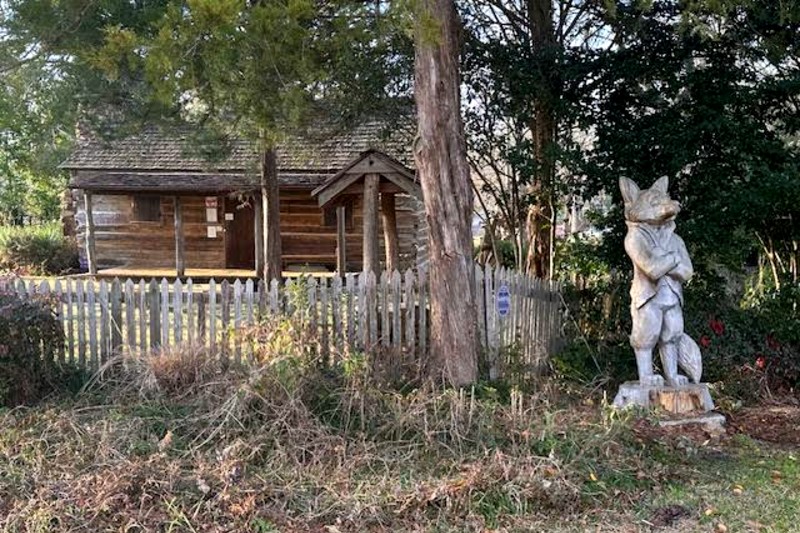
Today’s Mystery Photo offers several clues to its identification. See if you can convert clues to fact and tell us where this is located, and what is the purpose. Send your ideas to ebrack2@gmail.com.
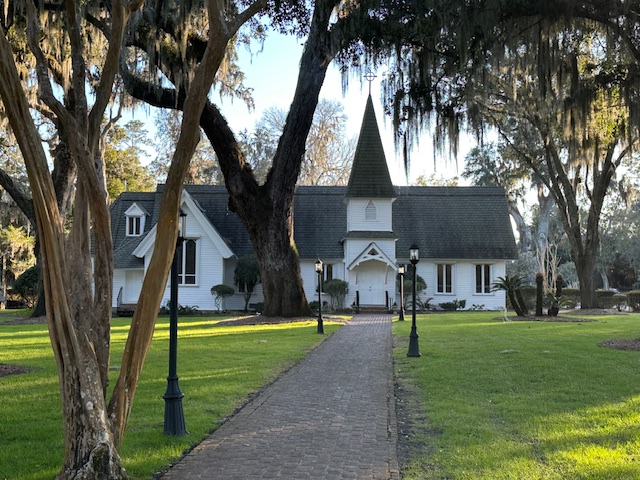 Sara Rawlins of Lawrenceville was among several who identified the last mystery. She wrote: “The photo is Christ Church Episcopal, Frederica, at Saint Simons Island. This church dates back to 1736 with the missionary work by the brothers, Charles and John Wesley. An interesting fact about the church: parishioners discovered a beehive in the church’s steeple. They collected the honey to sell and used the money to help make repairs to the church. As most things in Georgia during the American Civil War, it was destroyed. But that didn’t stop the people from holding church services with lay preachers and the occasional visiting clergy holding services. By 1879, Rector Anson Dodge Jr. helped reorganize the church and by 1884 rebuilt the church building on the same site as a memorial to his wife, who was buried on the church grounds.” The photo came from the vacationing Tim Keith of Sugar Hill.
Several readers recognizing the photo included Billy Chism, Toccoa; Jay Altman, Columbia, S.C.; Tracy Brookshire, Duluth; Barbara Luckhurst, Duluth; Barbara Myers Mason, Big Canoe; Molly Titus, Peachtree Corners; Tim Sullivan, Mulberry; Doug Cozart, Peachtree Corners; George Graf, Palmyra, Va.; Mike Monrgomery, Duluth; Cindy Hall, Canton; and Allan Peel, San Antonio, Texas: who added: “Beyond rebuilding Christ Church, Reverend Anson is credited with starting 34 Episcopal churches in Southeast Georgia and establishing the Anson Phelps Dodge Home for Boys in memory of his son, Anson Greene Phelps Dodge III (1891–1894), who, sadly, died in a tragic carriage accident. While riding with his father, the horse bolted, and the young boy was thrown from the carriage.
“One unique aspect to the church’s design stems from the fact that, because it was built by shipbuilders, the interior features a cruciform layout with a wooden ceiling designed to resemble an inverted ship’s hull, symbolic of the ‘ship of faith.” The church is also renowned for its stunning stained-glass, including a notable large window created in Germany and at least one unsigned Tiffany window.”
- Share a Mystery Photo: If you have a photo that you believe will stump readers, send it along (but make sure to tell us what it is because it may stump us too!) Click here to send an email and please mark it as a photo submission. Thanks.
Congressman Buddy Carter speaks Wednesday at PDC
 Novelist talk: Radha Lin Chaddah discusses her novel, And the Ancestors Sing, a multigenerational story of sacrifice, survival, and the unbreakable pull of home, set against the rapidly changing backdrop of post-Cultural Revolution China. This will take place on February 17 at 12:30 p.m. at the Duluth Branch of Gwinnett County Public Library.
The Norcross PDC (people drinking coffee) meets each Wednesday at 8:15 a.m. at the 45 South Café in downtown Norcross. The February 18 meeting will feature U.S. Rep. Buddy Carter of Savannah, who is running for U.S. Senate. The event is free and visitors are welcomed.
The Peachtree Corners Garden Club will hold a seed swap on February 19 at 6:30 p.m. at the City Hall Community Chest Room. Lynda Pollock will speak about seed starting, including vegetables and native plants.
Acclaimed author Terah Shelton Harris discusses her newest novel, Where the Wildflowers Grow, a poignant story of survival and redemption that questions what it means to stop existing and start living. This will take place on February 20 at 6:30 p.m. at the Duluth Branch of Gwinnett County Public Library.
Gwinnett Symphony Orchestra will present a concert on Sunday, February 22 at 5 p.m. at the First Christian Church of Atlanta, 4532 LaVista Road in Tucker. This concert features O Magnum Mysterium by Morten Lauridsen performed for brass choir, and Te Deum by Arvo Pärt performed by Gwinnett Symphony Chamber Singers and Chamber Orchestra with Conductors Rick Smith and Robert Trocina shaping an evening of reverence and inner light.
Award-winning author Denny S. Bryce will discuss her newest historical fiction novel, Where the False Gods Dwell, inspired by choreographer Katherine Dunham’s dance expedition, and the search for destiny that turns into a struggle for survival. This will be at the Duluth Branch of Gwinnett County Public Library on February 25 at 6:30 p.m.
Coca-Cola Preseason Party returns to Gwinnett Field on Sunday, March 1. Enjoy hot dogs and drinks, plus self-guided tours during free event at Gwinnett Field in Lawrenceville, where the Gwinnett Stripers play. The rain-or-shine event runs from 12 p.m. to 3 p.m. The event is free, but fans will need to reserve tickets online in advance.
Gwinnett will have a chalk fest festival in March. Gas South District, in partnership with Sugarloaf Community Improvement District and the Hudgens Center for Art and Learning, will host Draw the District: A Chalk Arts Festival on Saturday, March 7. It will bring a free, community-wide celebration of art, culture, and creativity to the area.
Irish Fest will take place in downtown Norcross March 7, from noon to 5 p.m. Come celebrate St. Patrick’s Day in style, with lively music, spirited Irish dancing, good food, balloon typing and other events. This is a partnership between the Norcross Business Association and the Drake School of Dancing.
A Night at the Hunnicutt Inn will be at Mt. Carmel United Methodist Church. This is an original play sharing the history of Mt. Carmel and the Pinckneyville community! Performances are Friday, March 13 at 7 p.m., and Saturday, March 14 at 3 p.m. and 7 p.m. at 5100 S. Old Peachtree Road, Norcross. Tickets are $15 and include dessert! Purchase tickets here.
GwinnettForum, which has been published online since 2001, is provided to you at no charge every Tuesday and Friday. The publication offers an online community commentary for exploring pragmatic and sensible social, political and economic approaches to improve life in Gwinnett County, Ga. USA. Learn more:
- Editor and publisher: Elliott Brack, 770-840-1003
- Mailing address: P.O. Box 1365, Norcross, Ga. 30091
- Work with us: If you would like to learn about how to be an underwriter to support the publication of GwinnettForum as a community resource for news and commentary, please contact us today.
Subscriptions to GwinnettForum are free.
- Click to subscribe.
- Unsubscribe. We hope you’ll keep receiving our great news and information from GwinnettForum, but if you need to unsubscribe, go to this page and unsubscribe in the appropriate box.
- © 2026, Gwinnett Forum.com.
