

By Elliott Brack
Editor and publisher, GwinnettForum
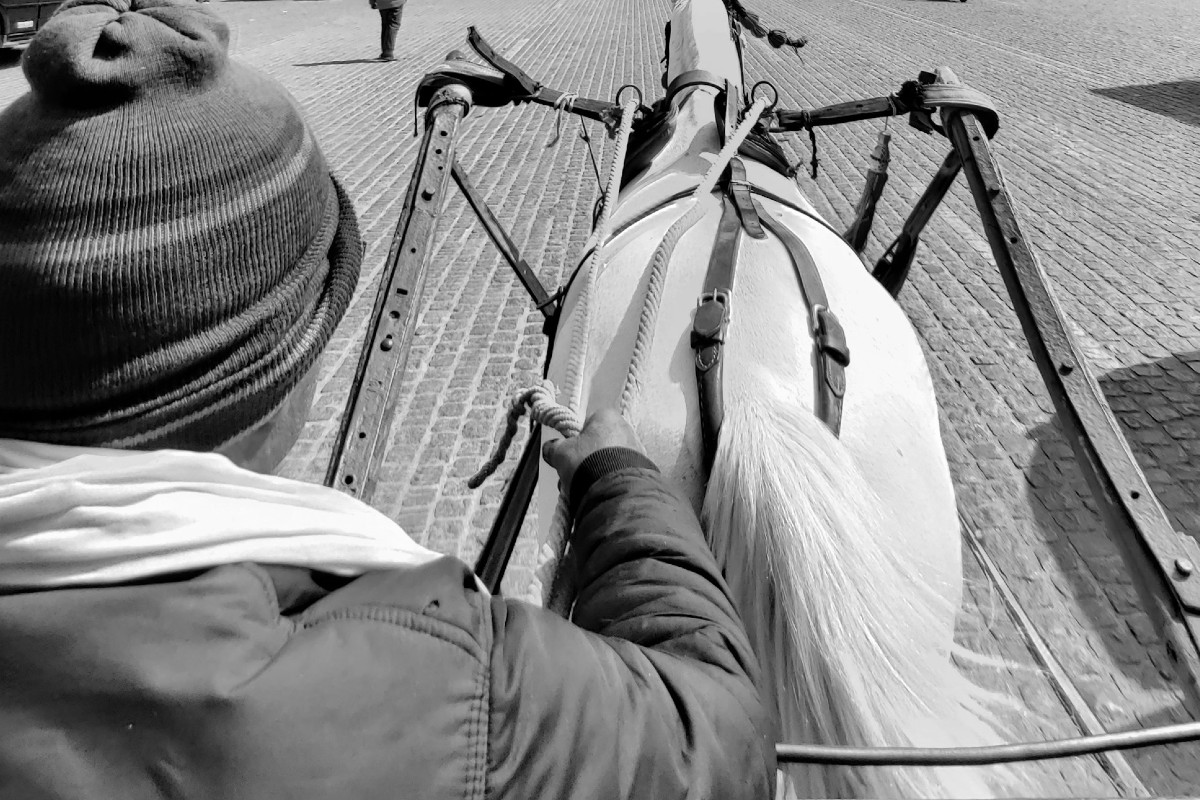
MARCH 13, 2026 | Few living Americans have experienced the joys of riding in a one-horse wagon.
 The joy? It was far better than walking.
Yes, I’ve ridden in those one-horse wagons. It was during visiting summers with my aunt and uncle, who were sharecropping a cotton farm in Middle Georgia during World War II.
It was a time when automobiles were not as standard as they are now. The number of automobiles in the USA has grown from approximately 27.4 million registered passenger cars in 1940 to over 103.8 million as of 2023. This represents a nearly four-fold increase in total passenger cars to nearly universal ownership.
Virtually universal before World War II were either mules of horses on Southern farms, to pull the plow through the fields. The animals were the farmer’s constant companion during the long days of the plowing season. (The agricultural census of 1940 showed 316,005 mules and mule colts in Georgia.)
Even farmers had to purchase provisions for everyday living. Many took Saturday afternoons off to go to town or the country grocery store. That’s when I remember my uncle hitching up his mule, pulling to the front of the house, and loading two straight-back chairs into the wagon. These were for the ladies, who enjoyed the drive without sitting on the hard planks of the wagon. Younger kids dangled their bare feet off the back of the wagon. My slot was on the driver’s bench with my uncle. And yes, as the mule trotted along the about three-mile trip to the store, he allowed me to hold the reins. We moved along on a sandy road, relatively smoothly.
Almost immediately after arriving at the store, where several other farmers had pulled up, we all got a treat. It was hand-dipped ice cream, and boy-o-boy was that vanilla cone delicious. Everyone in the wagon got a cone, except for my uncle, who bought a Coca-Cola.
While there, the family stocked up on the few items they might need, perhaps a pound of sugar, a can of coffee, flour, rice—the essentials for cooking. This family didn’t need corn meal, since my grandfather, who lived with them, operated a water-powered grist mill. They might also buy kerosene for the lamps in those days before rural electricity. And my aunt once got a cutting from a bolt of cloth for a new dress.
While at the store, of course, there was the socializing before the arrival of telephones. You would learn which families were going through some sickness, who had a new baby, and perhaps who the visiting minister might be at church the coming Sunday. I also remember that if it was an election year, there would be talk of politics, and even politicians hanging around seeking a vote. (The one-room district court house, where you voted, was about four miles from my uncle’s house in the other direction.)
Another place you would see people traveling in one-horse wagons in those days was at country church. My mother’s Primitive Baptist church met the fourth Sunday of the month. Often on other Sundays, our family would attend another nearby church of the same Association. I remember several families coming in a wagon, and hitching their mules in the shade.
Back at the store, after 30 or 45 minutes, it was time to load up and return home. So the family returned refreshed and re-provisioned, the ladies upright in their high-back chairs.
- Have a comment? Click here to send an email.
