

In the United States, daylight saving time starts on the second Sunday in March (March 8) and ends on the first Sunday in November (Nov. 1.), with the time changes taking place at 2 a.m. local time.

The saying goes that it takes an act of Congress to get something done. That includes Daylight Saving Time (DST).
Mike Martinez, assistant professor of legal studies at Georgia Gwinnett College (GGC) says: “Yes, it would take an act of Congress to do away with Daylight Saving Time. Initially, reasons for it included concerns about child safety when it’s dark during the school year. It’s something that has been debated for decades.”
DST started in the early 1900s and was mandated in the U.S. when Congress passed the Uniform Time Act of 1966. According to a poll conducted by the AP-NORC Center for Public Affairs, only 12 percent of Americans still support the fall and spring time changes. Even so it is yet to be accomplished.
“Unfortunately, the joke is that Congress is where good ideas go to die,” said Martinez. “Part of the problem is that for the past 40 years, Congress has become increasingly divisive, and a lot of districts are so heavily gerrymandered that they don’t want to play ball with the other party. That’s why it’s so hard to get anything done.”
So what needs to happen to either change or abolish DST?
“States can opt out of Daylight Saving and remain on Standard Time,” says Martinez. “Other states, like Georgia, have passed laws to stay on permanent Daylight Saving, but it can’t go into effect without federal authorization.”
Arizona and Hawaii are the only two states that don’t observe DST, along with five U.S. Territories: American Samoa, Guam, the Northern Mariana Islands, Puerto Rico and the U.S. Virgin Islands. So far, more than 20 states have passed legislation or resolutions to make DST permanent.
Adding to the issue states face is whether to adopt permanent DST or standard time. Either way, it still requires federal approval.
There may be light at the end of the tunnel. The Daylight Act of 2026 (H.R. 7378) was introduced in February. This proposal was to shift time zones by 30 minutes permanently and eliminate DST. U.S. Rep. W. Gregory Steube, R-Fla., put forth the bill on Feb. 4, 2026. The bill proposes a permanent, year-round, half-hour shift in daylight saving time to replace the traditional one-hour change.
“It’s tiring to have to change your clocks twice a year,” said Martinez. “It disrupts sleep cycles for millions of Americans. You already deal with the time zones in the U.S. and then need to add moving your clocks forward and back twice a year. Having a permanent time would benefit everyone.”
Lawrenceville plans meeting on coming annexation
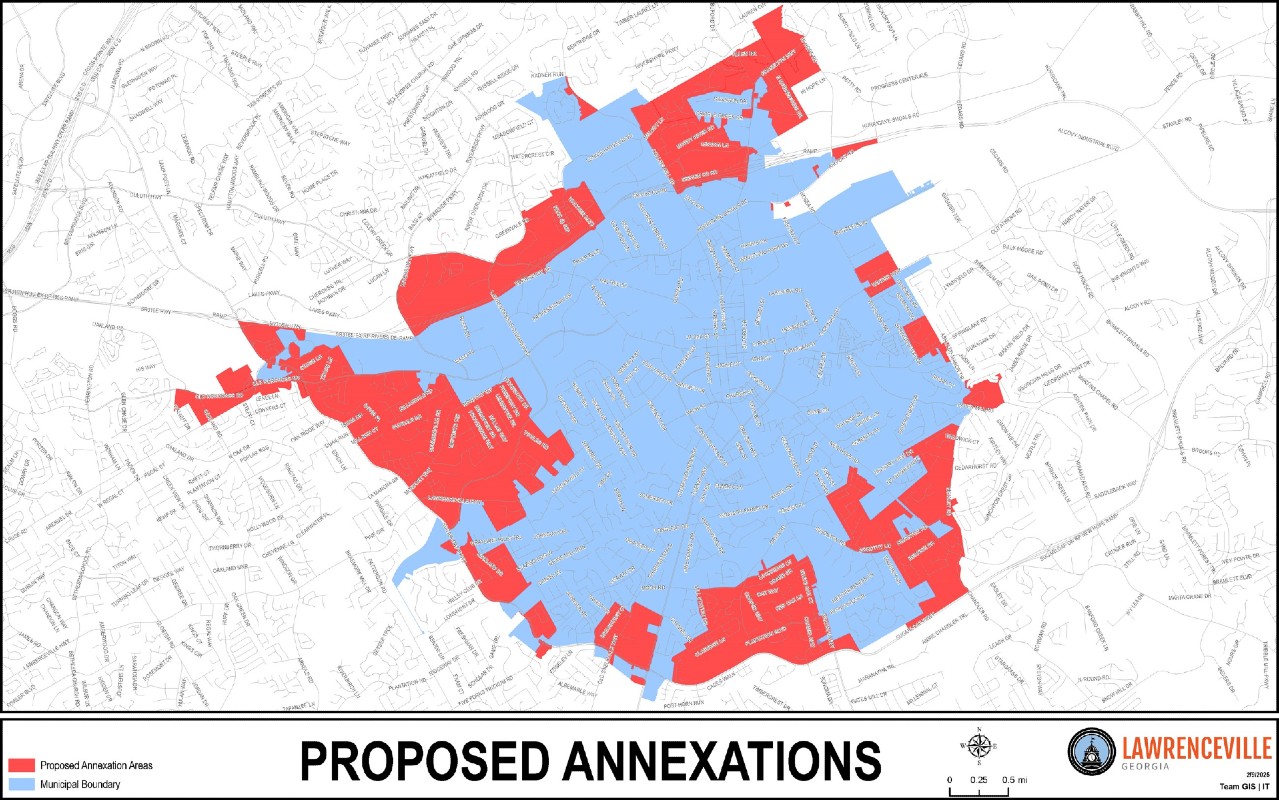
The city of Lawrenceville will host four public information meetings on a proposed annexation, to be held on May 19, 2026.
The public meetings will be on March 18, April 23, May 6, and May 14, starting at 6 p.m. in the council chambers at City Hall. The meetings will provide detailed information about the proposed annexation and allow residents and property owners to ask questions. Additional details are available at lville.city/annexation.
City staff will be available at each meeting to review the proposed annexation area, explain city services that will be provided if the annexation passes, and answer questions from residents and property owners. The meetings are designed to ensure that individuals in the proposed area have access to accurate information and an opportunity to speak directly with City representatives.
Residents who are unsure whether their property is included in the proposed area may review the online resources or contact the City for assistance at annexation2026@lawrencevillega.org.
