
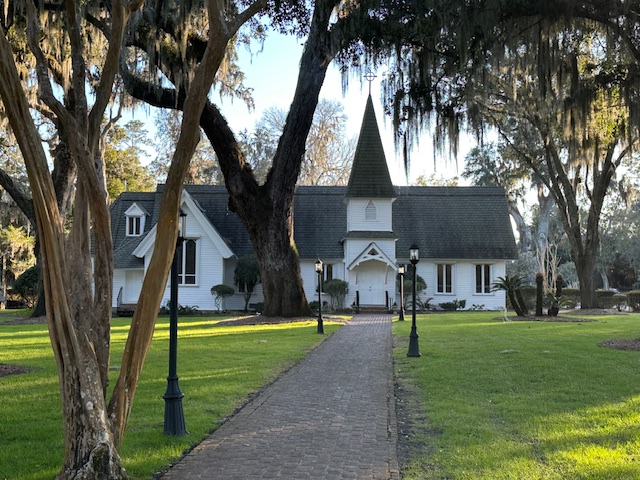
Non-natives of Georgia may not quickly recognize today’s Mystery Photo, but it will be duck soup for many natives. See if you can pinpoint the location of this photo. Send your answer to ebrack2@gmail.com and list your hometown.
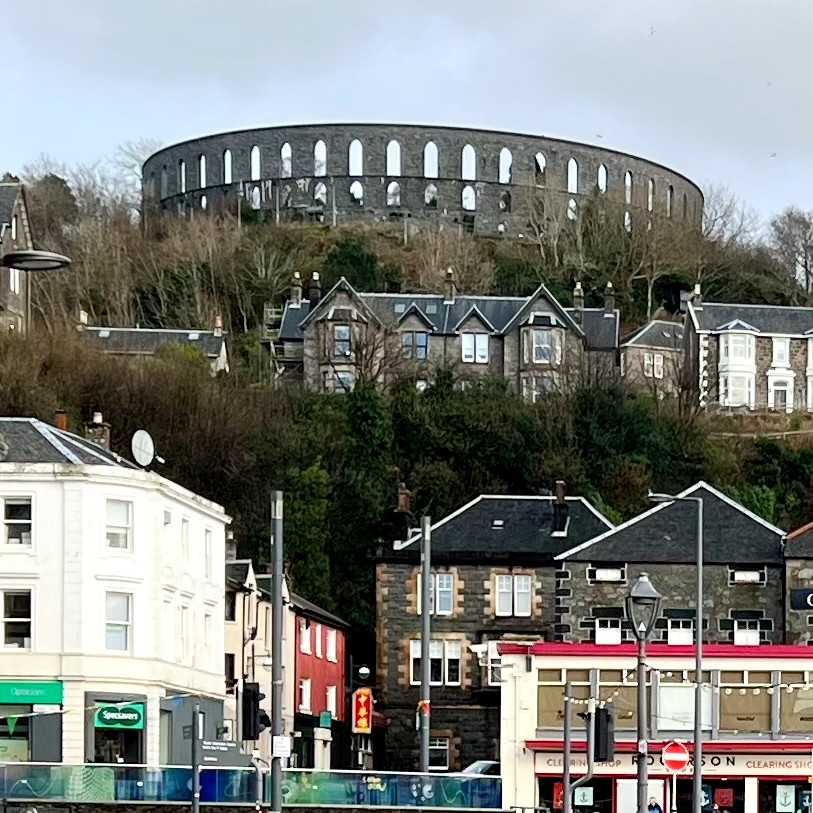 Stewart Ogilvie, Rehobeth, Ala. wrote of the last mystery: “If you are lucky enough to arrive in Oban, Scotland, by sea, then one of the first things to strike you is the presence on the summit of Battery Hill above the town of a large structure that looks like it might have been inspired by the Colosseum in Rome. It was. Welcome to McCaig’s Tower, a magnificent folly that, but for the death of the man it was named after, might have ended up being even more magnificent, though at the same time looking rather less like the Colosseum.
“The story of the building of McCaig’s Tower is a fascinating one in its own right, but over the years elements of it have grown in the telling. The starting point has to be with John Stuart McCaig, a native of the Isle of Lismore who became a successful banker with the North of Scotland Bank. McCaig was 72 years old when in 1895 he commissioned work on what became McCaig’s Tower. His view of himself can be seen from the inscription he had placed above the entrance: “Erected in 1900 by John Stuart McCaig, art critic and philosophical essayist and banker, Oban.” The photograph came from Mary Green of Milton.
Others sending the right answer included Caron Czburnet, Suwanee; Jay Altman, Columbia, S.C.; George Graf, Palmyra, Va.; Bobbie Cromlish, Stone Mountain; and Allan Peel of San Antonio, Texas, who added: “Built entirely of Bonawe granite, sourced from local quarries on Loch Etive, McCaig designed the structure himself. The structure features a circumference of about 650 feet and contains 94 lancet arches across two tiers (44 on the bottom and 50 on the top). McCaig originally planned for a much more elaborate complex with a central tower, museum, art gallery, and statues of himself and his family in the arched windows. However, it remains unfinished. Following McCaig’s death in 1902, construction ceased because his heirs successfully challenged his will, which had allocated funds for its completion. Today, the interior of the hollow shell serves as a public spot for views of the town, the harbor, and the nearby islands of Kerrera, Mull, and Lismore.”
- Share a Mystery Photo: If you have a photo that you believe will stump readers, send it along (but make sure to tell us what it is because it may stump us too!) Click here to send an email and please mark it as a photo submission. Thanks.
