GwinnettForum | Number 26.23 | March 20, 2026
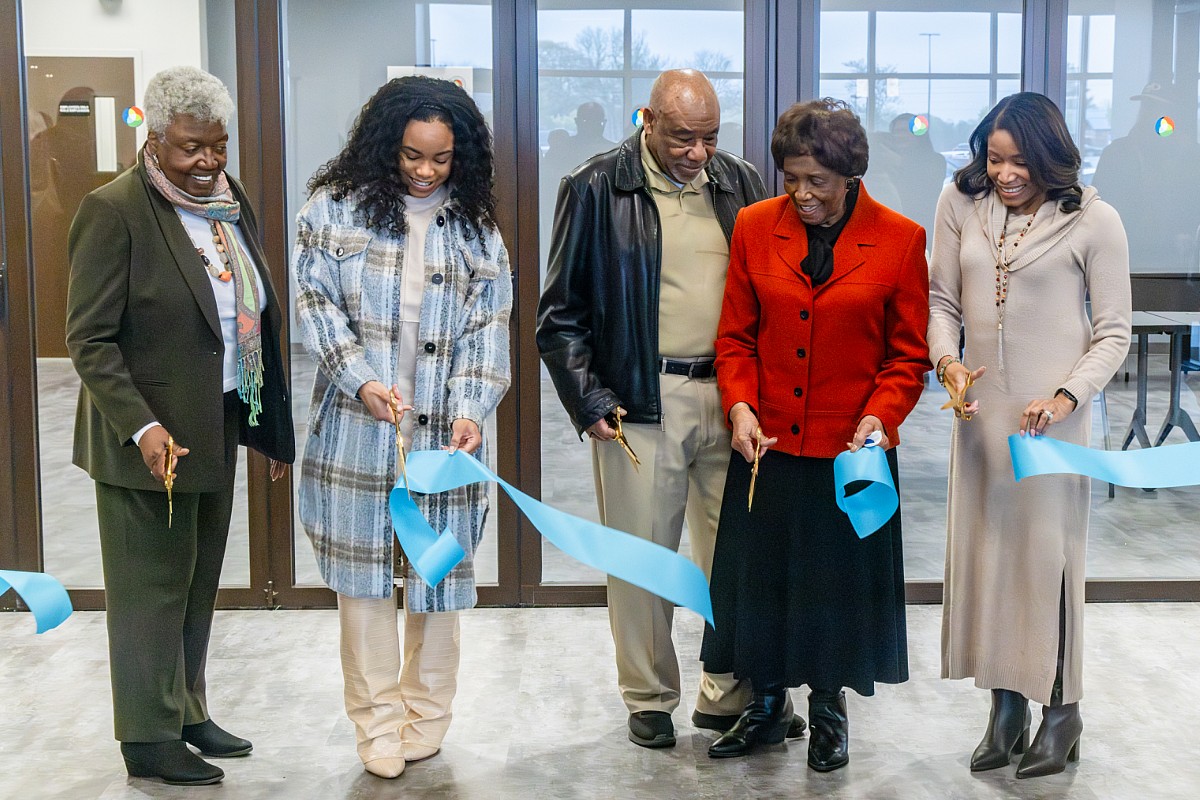
THE RIBBON GOES AFLUTTER as the Beauty Baldwin family snaps the scissors on the completed renovations at the Voter Registrations and Elections Beauty P. Baldwin Building in Lawrenceville. Members of the family include sister Lucille Poole Johnson; granddaughter Loren Gonzalez; husband, Lucious Baldwin; Beauty; and daughter, Jeri Gonzalez. The renovations of the building bring operations to one facility. Enhancements expand the advance voting space, support transparency for media and observers on election night, enhance poll official training opportunities; and increase efficiency for Gwinnett Voter Registrations and Elections.
TODAY’S FOCUS: Attacks on Hormuz shipping can cause ripple effect
EEB PERSPECTIVE: Elections supervisor joining election nonprofit
SPOTLIGHT: Georgia Banking Company
ANOTHER VIEW: A look at the Republican campaign of Rick Jackson
FEEDBACK: Looking back, most years USA has been in war of some kind
UPCOMING: Williams is new acting elections supervisor
NOTABLE: GGC finds a little reading goes a long way
RECOMMENDED: Stop Letting Everything Affect You, by Daniel Chidiac
GEORGIA TIDBIT: In Georgia, newspapers began in Savannah in 1763
MYSTERY PHOTO: Another out West photo to test your skills
CALENDAR: GIS Tutorial coming Saturday to Mountain Park
Attacks on Hormuz shipping can cause ripple effect
By Teresa Araque
LAWRENCEVILLE, Ga. | As attacks on shipping vessels and the instability it creates in the Strait of Hormuz continue, ripple effects are already being felt in the United States.
Sanjaya Mayadunne, associate professor of decision sciences and management information systems at Georgia Gwinnett College (GGC), said consumers are beginning to see the first impacts.

“You’re seeing energy costs, like gas prices, go up,” he says. “There are always disruptions of some type in supply chains, and supply chain managers have become increasingly good at finding creative solutions to mitigate them. However, you can’t really innovate yourself out of rising energy costs. The unpredictability further hampers effective decision making.”
The Strait of Hormuz is one of the world’s most critical shipping routes for oil. Disruptions there can cause a supply shock that affects global energy prices, which in turn hampers the movement of goods around the globe.
“When energy costs increase, that also affects the cost of producing and moving goods, whether that’s via water, land or air,” Mayadunne says. “That means shipping and trucking costs are going to go up. Large trucking corporations and ocean freight carriers can compensate to an extent because they have built in emergency fuel surcharges to their long-term shipping contracts that create a buffer. Smaller trucking carriers will get hit harder because they don’t have the leverage to absorb those higher costs and may have to take the hit directly.”
One way suppliers attempt to mitigate these disruptions is by increasing inventory.
“If you can see that energy prices, which are volatile by nature, are going to rise more than anticipated due to something like the Iran conflict, then the fastest and easiest way for suppliers to mitigate that is to build inventory,” says Mayadunne. “In fact, suppliers will be able to keep prices somewhat stable for a short period of time due to existing stockpiles. Eventually, however, increased production and shipping costs will trickle down to the consumer by way of higher prices.”
Georgia could feel these impacts particularly strongly. The state is home to the Port of Savannah, one of the busiest container ports in the United States and a major logistics hub that distributes goods across the Southeast and Midwest.
Mayadunne says shipping disruptions in the Strait of Hormuz can also affect agriculture. He said that 49 percent of global urea exports and about 30 percent of global ammonia exports pass through the strait and the potential closure has significantly increased fertilizer prices.
“Spring planting in Georgia has started,” he says. “Those higher costs will eventually hit the food supply, so consumers will see rising prices.”
Major shipping disruptions are not unprecedented. In 2021, a container ship ran aground in the Suez Canal, blocking traffic for six days and disrupting global trade in the 2021 Suez Canal blockage.
“That blockage cut off half the world from the U.S. market,” Mayadunne says. “Had it gone on longer, one option would have been rerouting ships. While that gets products to port, it also means higher shipping costs and lost time, which is also money when it comes to supply chains.”
Despite the challenges, Mayadunne says: “These problems shine a light on weaknesses in supply chains. That offers supply chain experts the opportunity to innovate and strategize for greater efficiency.”
- Have a comment? Click here to send an email.
Elections supervisor joining national nonprofit
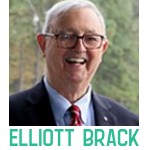
By Elliott Brack
Editor and publisher, GwinnettForum
MARCH 20, 2026 | Gwinnett County Elections Supervisor Zach Manifold will join a national nonprofit, the Partnership for Large Election Jurisdictions (PLEJ), as deputy executive director on Monday. For the last five years, he had led the Gwinnett Elections Division as it went through many changes in procedures, including providing all voting material in both English and Spanish, now Federal law.
 PLEJ is a national, nonpartisan organization that provides a community of support, access to best practices, and peer-to-peer engagement among large election jurisdictions. Election leaders work across the political spectrum to implement safe and secure, free and fair elections around the country. Members are from the biggest 300 counties in the nation, representing 75 percent of the voters in the country.
Manifold, who lives in unincorporated Buford, will work from home, as other members of PLEJ do. “Think of PLEJ as a tool kit of resources for large county elections officials, an ultimate large knowledge connector when it comes to voting. When this came along, I could not turn down the opportunity. It is a dream job for me.” His last day with the county is on Friday (today).
PLEJ began when six large counties in the nation found that they had common problems with voting and elections. That’s when Carolina Lopez of Miami, Fla. organized the group into a nonprofit. She had experience running elections in the Miami area.

The current steering committee of PLEJ consists of elections officials from Durham County, N.C.; Atlantic County, N.J.; Santa Fe, New Mexico; St. Louis County, Mo.; Los Angeles County, Calif.; Denver, Colo.; Cook County, Ill.; and Marion County, Ind.
Besides offering peer-to-peer help, PLEJ brings elections officials together in conferences; opens its meetings to election vendors; seeks grants for operations; promotes retention and development; and supplies non-partisan resources. In effect, these election officials use their knowledge to help other officials around the country.
There are several larger counties in Georgia that are members of PLEJ.
Manifold, 45, is a native of Kettering, Ohio, and is a graduate of Ohio State University, where he majored in political science. He worked in elections in the Columbus area before taking the Gwinnett job in 2021.
He and his wife, Julia, met when 16 years old. She is a teacher in Jackson County. They have been married for 23 years, and have two children, ages 12 and 17, who attend Gwinnett County Public Schools.
Welcome to your dream job, Zachary Manifold!
- Have a comment? Click here to send an email.
Georgia Banking Company
 The public spiritedness of our sponsors allows us to bring GwinnettForum.com to you at no cost to readers. At Georgia Banking Company (GBC), we are deeply committed to empowering the communities we serve. Our dedication goes beyond traditional banking: we actively engage in community events, support local charities, and collaborate with small businesses to boost local economic growth. By being an integral part of the community, we strive to make a positive impact on the lives of our customers and neighbors. Our approach to community banking is all about providing personalized financial services that meet the unique needs of individuals and businesses.
We understand that every community is different, so we tailor our services to ensure we’re meeting the specific needs of each one. Whether it’s through our involvement in local events, our support for charitable organizations, or our partnerships with small businesses, we’re committed to making a difference. At GBC, we believe that when our communities thrive, we all succeed. Our team is dedicated to building strong relationships and providing expert financial advice to help our customers achieve their goals. We take pride in being a trusted partner and neighbor, and we’re honored to be a part of the communities we serve. Discover why Georgia Banking Company is the Bank of Choice for so many.
- Visit www.GeorgiaBanking.com to learn more about our commitment to community banking and how we can help you achieve your financial goals. Member FDIC.
- For a list of other sponsors of this forum, click here.
A look at the Republican campaign of Rick Jackson
(Editor’s note: today columnist Jack Bernard begins a four-part series on top Republican candidates for governor. They will continue on Fridays for four weeks.)–eeb
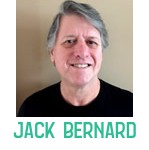
By Jack Bernard, contributing columnist
PEACHTREE CITY, Ga. | If you are like most people, you probably have not been keeping up with the GOP primary race for governor of Georgia. The General Primary Election will be held May 19, 2026. Voters must understand the field so that we are not saddled with the wrong person for four years.
 Georgia ended up with seven Republican candidates, three of whom are virtual unknowns. The four major candidates for the GOP nomination are Lt. Gov. Burt Jones, businessman Rick Jackson, Georgia Secretary of State Brad Raffensperger and Georgia Attorney General Chris Carr.
Let’s start with Jackson, the previously unknown “outsider” who suddenly is funding advertisements all over our TV screen. Jones, Carr and Raffensperger will be covered in coming weeks.
First, let’s state the obvious. Jackson, a self-made man who admirably rose from poverty, is obviously trying to use his vast wealth as founder of the Jackson Health company to buy the primary nomination.
He is not the first to try to buy into politics. We have a crypto billionaire in the White House who also had no political experience before 2016. But Jackson has been even more blatant about his plans, stating that he will be spending $50 million of his own funds on the campaign which he just entered in February.
However, I suspect that he has been looking at the race since late last year. Jackson suddenly gave the Trump campaign PAC a $1 million donation in December.
Plus, for the last few months, an anonymous shadowy group called “Georgians for Integrity” has been filling the airwaves with $9 million in ads slamming Lt. Governor Burt Jones on a variety of ethical issues. Although no one has taken credit for funding this mysterious group, which is very strange, it is not hard to theorize as to where their money is coming from. Speculation is that Jackson is rightfully hesitant to attack Jones directly in that Trump has already endorsed the lieutenant governor, a “false elector” who attempted to change the outcome of the 2020 Presidential election to make Trump president.
As for the issues, his positions have not been spelled out in detail. Jackson has decided to simply parrot the MAGA line. His far-right direction is clear- total support for ICE and Trump’s deportation efforts, while opposing traditional civil rights (i.e., DEI-diversity, equity and inclusion) and anything that could even vaguely be considered “woke.”
Jackson proposes to cut state income taxes in half in four years and eliminate them entirely in eight years, rather than improve state services like Medicaid expansion for the working poor.
Let’s ignore the fact that 18 percent of Georgians in ages 18-65 have no medical insurance. Or the fact that, because of medical bills (not high taxes), Georgia has more bankruptcies per capita than almost any other state. That’s a mistake, given that Georgia voters believe it to be the second most important election issue, right after the economy.
Jackson also wants to freeze local property taxes. He does not indicate how local governments can pay the day-to-day county operations and improve Georgia’s deteriorating roads and vital infrastructure.
Obviously, Rick Jackson’s strategy is to enter the race and outspend the others. He knows he will not get a majority of primary votes and can hope only to be in a run-off.
- Have a comment? Click here to send an email.
Most years, USA has been at war of some kind
Editor, the Forum:
 Being at war for the United States is close to absolute. For most of the 250 years of our existence, we have been in a war of one kind or another. Most Americans do not think of this, but that is the way that it is in reality. The problem with every war since the end of World War II, we have not won many at all.
A lightweight search of Google will give you the answer, if you want it. I extracted most of the following from Google, probably AI.
The wars will include a variety of Indian wars and other petty wars, but they are wars.
Wars are expensive. The current one is costing about $40 million per day. The tanker that was lost would cost $80 million to replace. Then there is the problem that there is no way to put a replacement cost on a soldier or sailor or an airman who died in these wars.
“How many years has the US not been involved in a war?
Using the approach based on the list of wars involving the United States, which counts any year in which U.S. forces were involved in an armed conflict somewhere, the USA has been involved in wars or military conflicts for roughly 230 to 235 of those years.
That leaves only five years without any active conflict.
– Raleigh Perry, Buford
- Send us your thoughts: We encourage you to send us your letters and thoughts on issues raised in GwinnettForum. Please limit comments to 300 words, and include your hometown. The views of letters are the opinion of the contributor. We reserve the right to edit for clarity and length. Send feedback and letters to: ebrack2@gmail.com.
Williams is new acting elections supervisor
The Gwinnett County Board of Voter Registrations and Elections has appointed Kelvin Williams as acting elections supervisor. Williams joined Gwinnett County Voter Registrations and Elections in 2016 and has served as the deputy elections supervisor since 2021.
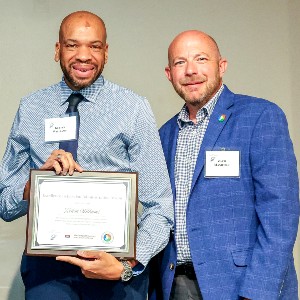
Current Elections Supervisor Zach Manifold, who has held the position since 2021, is leaving to join the Partnership for Large Election Jurisdictions.
Board of Voter Registrations and Elections Chair David Hancock says: “Gwinnett County is fortunate to have this depth of experience in its elections management team. Every time I ask someone a question they don’t know off the top of their head, their response is usually ‘Let me ask Kelvin.’ The Board is confident that Kelvin will manage the Elections Office and these midterm elections without missing a beat.”
With more than 24 years of voter registrations and elections administration experience — including serving as an elections director prior to joining Gwinnett County — Williams has successfully overseen the implementation of three voting systems and three statewide voter registration system migrations.
In 2025, Williams received the Georgia Award of Excellence in Election Administration from the Georgia Democracy Resilience Network and the Carter Center.
Zachary Manifold says: “Kelvin’s dedication to Gwinnett voters and thoughtful leadership have made a lasting impact on our elections. He brings exceptional knowledge, commitment and experience to this role, and his steady presence will see the division through the upcoming elections cycle with the integrity and transparency our voters expect.”
GGC finds a little reading goes a long way
As very young children, learning begins with recognizing numbers and letters. By third grade, students are reading books, opening worlds of wonder and knowledge. However, not all children make the transition to reading at grade level.
According to the Georgia Council on Literacy, 62 percent of third grade students are not reading proficiently. That number increases to 68 percent for fourth graders and 69 percent for eighth graders. This year, Georgia legislators are pushing for passage of the Georgia Early Literacy Act, designed to provide training and support for educators and screening for learning disabilities.
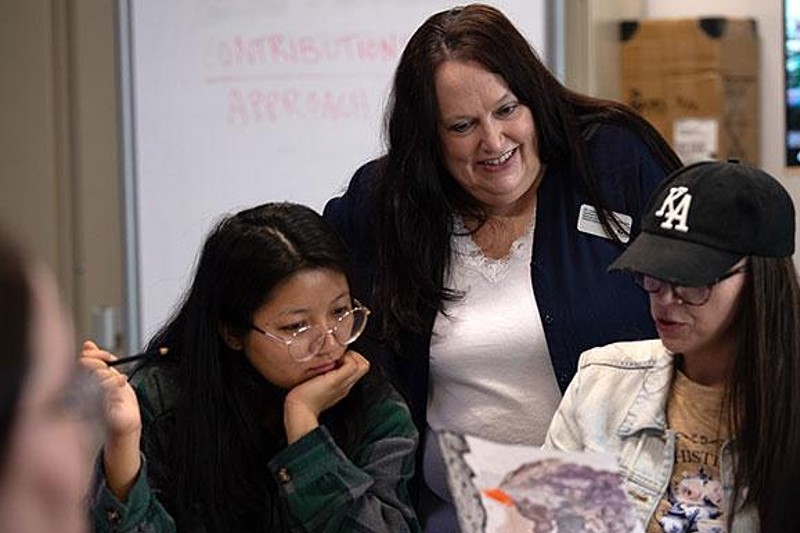
At Georgia Gwinnett College’s (GGC) School of Education, faculty are taking a proactive approach to preparing future teachers to address the issue.
Dr. Jamie Caudill, assistant professor of Literacy Education and chair of GGC’s Elementary Education and Literacy Department, says: “Our reading assessment class trains our teacher candidates how to identify reading difficulties early. Once we pinpoint the need, our student candidates create individual lesson plans to help their students overcome those difficulties.”
For Snellville resident Crystal Coke, a junior majoring in elementary education at GGC, the classroom experience reinforces what she’s learning. “Early detection is key,” she says. “Screening our students helps us determine if they have a reading deficiency. For me, I also like just talking with them. You’ll hear if they struggle with things like phonics.” As a child, Coke’s favorite book was Llama Llama Red Pajama.
Kristina Jackson, a Braselton resident and junior elementary education major, says teaching is both challenging and rewarding. “If you know what a child likes, you can use that interest to help them read and improve the areas that need work. here to help them and put smiles on their faces.” Growing up, Jackson loved reading Are You My Mother? and The Rainbow Fish.
The reasons for low literacy vary, ranging from health issues to economic challenges.
Dr. Christine Reilly, associate professor of Literacy Education, Elementary Education and Literacy Department Chair, says: “Some students may have developmental delays or undiagnosed conditions like dyslexia. Many times, students simply haven’t been exposed to reading or haven’t been read to regularly by a parent. It’s the teacher’s responsibility to provide explicit and systematic reading instruction that all students deserve in those early years of learning.”
If reading deficiencies continue into adulthood, the consequences can be significant. According to the Adult Literacy 2023 Deloitte Report, nearly one million adults in Georgia have low literacy skills. The report also estimates that low literacy costs the state $1.2 billion annually through lost tax revenue, increased demand for social services and higher incarceration rates.
Stop Letting Everything Affect You, by Daniel Chidiac
 From Rick Krause, Lilburn: Oh no! Not another self-help book! Yep. In Stop Letting Everything Affect You, Daniel Chidiac delivers a compelling and direct message for restoring inner peace in this overwhelming world. Published just last year, the book serves as a reality check for those caught in traps of overthinking, emotional chaos, and self-sabotage. Chidiac’s core principle is empowering: although we cannot control external events, we possess control over our responses. He helps the reader differentiate between reality and the damaging narratives they construct. He states that detachment is an act of self-respect rather than coldness, and teaches us how to set firm boundaries and stop absorbing the emotional weight of others. This is more than just a standard motivational piece; it is a step-by-step guide to achieving ‘emotional sovereignty.’ I highly recommend this for anyone ready to stop people-pleasing and start living with steady, quietly unshakable clarity.
- An invitation: what books, restaurants, movies or web sites have you enjoyed recently? Send us your recent selection, along with a short paragraph (150 words) as to why you liked this, plus what you plan to visit or read next. Click here to send an email.
In Georgia, newspapers began in Savannah in 1763
Print journalism in Georgia began in 1763 when James Johnston established the state’s first newspaper, the Georgia Gazette, in Savannah. Georgia’s colonial legislature designated Johnston, an immigrant from Scotland, the Royal Printer for the colony. In addition to printing the government’s laws, he used the opportunity to establish Georgia’s first newspaper. The inaugural issue of the Georgia Gazette ran on April 7, 1763, containing local and international news items, an inventory of goods shipped into Savannah, and advertisements for both fugitives from slavery and the sale of an island.
 Johnston took a neutral stance on the politics of the day and printed both the laws of the colonial government and news of discord among the colonists. This neutrality put him at odds with the Patriots in Georgia, and he fled the state in 1776. When the British recaptured Savannah in December 1778, Johnston returned to the city to print the Royal Georgia Gazette. On January 30, 1783, after the British abandoned their positions in Savannah, the state government allowed Johnston to continue publishing under a new title, Gazette of the State of Georgia.
Johnston and his son would continue to print newspapers until 1802, by which time they faced competition as newspaper journalism began to proliferate across the state. In 1785 the state officially moved the seat of government from Savannah to Augusta.
During this period, several newspapers appeared in the new capital. The first of these was the Augusta Gazette, which began circulation in August of that same year. The modern-day Augusta Chronicle traces its roots to the publication, making it the oldest newspaper in Georgia still in print. A second newspaper, the Southern Centinel, and Universal Gazette, began publication in 1793, making Augusta the first city in Georgia with multiple newspapers in print.
Two more newspapers appeared in Savannah that same decade, while the State Gazette and Louisville Journal began publication in the state’s newly appointed capital, Louisville, in 1798. By the turn of the eighteenth century, there were five newspapers in print in Georgia, and by 1812, there were at least twenty. Much of that growth came in smaller cities and towns, including Athens, Milledgeville, Washington, and Sparta.
- To view the Georgia Encyclopedia article online, go to https://www.georgiaencyclopedia.org
Another out West photo to test your skills

Here’s another Mystery Photo from out West. Besides telling us where this is, identify what this formation has been called. Send your answer to ebrack2@gmail.com. Include your hometown.
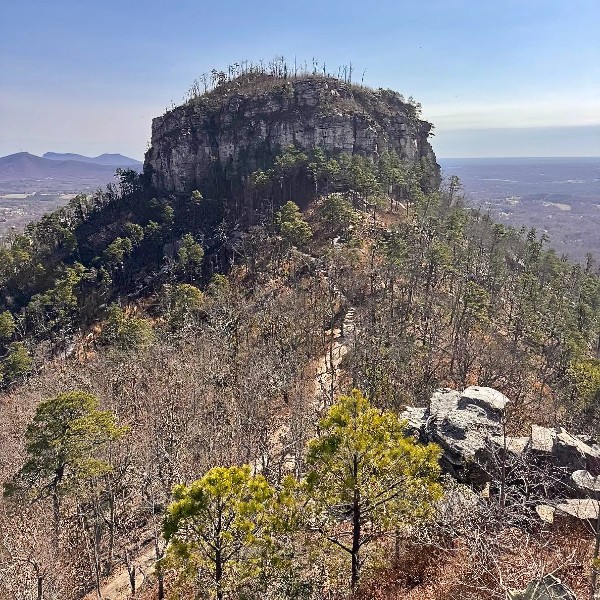 For the last edition mystery, Paula Waldroup of Hayesville, N.C., wrote as follows: “This is a picture of Pilot Mountain in Pilot Mountain, N.C. It is so named because native Americans used the mountain as a guide. The mountain was privately owned until the 1960s when North Carolina bought it and named it as a state park. Pilot Mountain was often referred to in The Andy Griffith Show.”
Ann Royster of Shelby, N.C., took the photo last week, and it came via her sister, Susan McBrayer of Sugar Hill.
Others recognizing the photo include Dick LoPresti, Berkeley Lake; Jay Altman, Columbia, S.C.; George Graf, Palmyra, Va.; Raleigh Perry, Buford; and Allan Peel of San Antonio, Texas, who wrote: “Today’s mystery photo is of Big Pinnacle, located in Pilot Mountain State Park, N.C., approximately 15 miles south of the Virginia-North Carolina border.
“While the mountain top is officially known as “Big Pinnacle,” locals will often refer to it as “Pilot Knob” or simply “The Knob,” as suggested in your clue to the mystery photo. However, long before the Europeans settled in the area, the Saura Native Americans called the mountain ‘Jomeokee,’ which translates to ‘Great Guide’ as the mountain peak served as a vital landmark for both indigenous people and early pioneers traveling through the region. In honor of the Native Americans who lived here, Pilot Mountain State Park created an eight-mile, moderate-level trail called ‘The Jomeokee Trail’ that visitors can use to go completely around ‘The Knob.’ However, since the late 1970s, climbing the summit has been closed to the public in order to protect the rare and fragile plants that are part of the protected breeding and nesting ground for ravens and other raptors.”
- Share a Mystery Photo: If you have a photo that you believe will stump readers, send it along (but make sure to tell us what it is because it may stump us too!) Click here to send an email and please mark it as a photo submission. Thanks.
GIS tutorial coming Saturday to Mountain Park
 A GIS tutorial will be held on March 21 from 3 to 5 p.m. at the Country Inn and Suites at 1852 Rockbridge Road in Mountain Park. Learn how to use the Gwinnett County GIS Data Browser and you will better understand your community. Jessica Owens will walk you through this resource. This is sponsored by the Mountain Park Community Association.
Help Master Gardeners kick of the spring season at the Spring Blooms Market. We are looking for local vendors offering handmade treasures, vintage finds, and tasty food! To be considered, fill out an application and return to this email address. The event is Saturday, March 21 from 11 a.m. to 3 p.m. at the Bethesda Senior Center.
Author Marissa McFarland will discuss her debut novel, When Goodbyes Begin, a multi-generational story about identity, sacrifice, and coming home. She will speak on March 25 at 6:30 p.m. at the Duluth Branch of Gwinnett County Public Library.
Gwinnett Symphony Orchestra presents Chris Martin and The Planets, a concert headlined by the principal trumpet of the New York Philharmonic, Chris Martin, Sunday, March 29. This will take place at Discovery Theatre in Lawrenceville at 7 p.m. Martin will perform Arutunian’s brilliant Trumpet Concerto and John Williams’ With Malice Toward None. After intermission, the orchestra embarks on a cosmic journey with Holst’s The Planets.
DIY Fix-A-Leak Workshop: Learn to save water and money at this hands-on workshop with the Gwinnett County Department of Water Resources. This will be on March 31 at 6 p.m. at the Snellville Branch of Gwinnett County Public Library.
GwinnettForum, which has been published online since 2001, is provided to you at no charge every Tuesday and Friday. The publication offers an online community commentary for exploring pragmatic and sensible social, political and economic approaches to improve life in Gwinnett County, Ga. USA. Learn more:
- Editor and publisher: Elliott Brack, 770-840-1003
- Mailing address: P.O. Box 1365, Norcross, Ga. 30091
- Work with us: If you would like to learn about how to be an underwriter to support the publication of GwinnettForum as a community resource for news and commentary, please contact us today.
Subscriptions to GwinnettForum are free.
- Click to subscribe.
- Unsubscribe. We hope you’ll keep receiving our great news and information from GwinnettForum, but if you need to unsubscribe, go to this page and unsubscribe in the appropriate box.
- © 2026, Gwinnett Forum.com.
