
By Elliott Brack
Editor and Publisher, GwinnettForum
APRIL 17, 2026 | By reading in a wide and diverse manner, we tried to stay reasonably informed. But you can never tell where you may find a new gem. We learned something we never heard of recently from the April issue of the Snellville Historical Society newsletter.
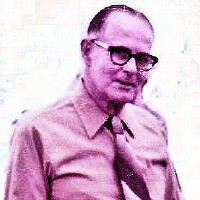
 In a continuing series Thomas H. Ewing writes about “Snellville’s Greatest Generation,” telling of wartime activities of local people. He recently wrote of his uncle, John Tyler Ewing Jr., the son of the late John and Effie Tyler Sr., who raised nine children on a family farm in the Killian Hill area. John Jr. was born in 1909. Later the family bought a 100 acre farm on Webb Gin House Road near what is now Ronald Reagan Parkway.
During the Depression, John Jr. joined the Army and served for two years, mostly in the Canal Zone in Panama, getting out in 1936. Then in 1942, John Jr. enlisted in the Army again, and began writing a detailed diary of his military life, where Thomas Ewing got this information.

At some point, Ewing was assigned to an Ordinance Median Aut0motive Maintenance Company. His company was soon on the way to the West Coast, where they boarded a Dutch Ship, the Nieuw Amsterdam, and sailed first for Wellington, New Zealand, then Freemantle, Australia, then Ceylon (now Sri Lanka), where they debarked this ship.
Shortly, the company boarded the British ship Santhia Lundon, sailing on June 9, 1943, first stopping at Bombay, India, before arriving in the country of Iran, through the Straits of Hormuz, after 54 days at sea. Their travel was not over, for they were driven 175 miles by military truck to Andimeshk, Iran, arriving June 28, 1943. On arrival, Sergeant Ewing’s diary said their barracks were “mud huts.”
Why was this company of 175 men (seven officers and 168 men) there? This is where the story gets interesting. As Ewing says: “Surprisingly, to take over and operate a General Motors Truck Assembly Plant, a part of the (American) Lend Lease program to supply Russia with trucks through the Persian Gulf Corridor…part of Roosevelt and Churchill’s seldom mentioned program.”
Wow! We knew of Lend Lease, but never knew Americans built trucks in Iran for Russia. Eventually, Ewing’s unit employed 1,700 Iranians in operating this plant. Altogether, the American Army operated four truck assembly plants in Iran for the Russians. The Soviets would send men to drive the trucks back overland to the Russian front.
Assembling the trucks was under difficult circumstances. Temperatures often exceed 100 degrees. Sand storms were frequent. Rain turned sand into mud. And there were earthquakes. But production continued. Altogether, Ewing’s plant at Andimeshk produced 79,370 vehicles in the 18 months it was operating. Together with the three other plants, a total of 184,000 vehicles, including gun carriers and Jeeps, were built, in plants supplied by Ford, Studebaker and Mack trucks. One of the plants was transferred to the Russians, and the last plant closed on November 30, 1944.
As the war progressed, Russia moved its Army to meet the Germans often in a truck built by American companies, overseen by American soldiers in Iran. How interesting!
Meanwhile, Sergeant Ewing’s Army unit departed overseas on April 10, 1945, and later was in Camp Hood, Texas, where he was discharged on Oct. 23, 1945, after three years of service, including nearly two years in Iran.
John Tyler Ewing Jr. returned home, farmed for a while, and worked in Atlanta. He died on Dec. 29, 2002, at age 93, another of our “greatest generation.”
- Have a comment? Click here to send an email.
